Boiler Repair Serving Prince George's, Montgomery & Charles Counties and Northern Virginia
- Circulators and zone valves fixed
- Most major boiler brands repaired
- $150 diagnostic, credited to repair
Request Service
Where Boiler Trouble Usually Starts
Boiler trouble usually starts in the parts around the boiler, not in the boiler itself. The boiler just heats the water. A circulator pump moves it, an expansion tank gives it room to grow and zone valves send it where it's needed. When one of those parts gives out, the water stops moving or the pressure climbs, and your radiators go cold even though the boiler is fine.
Su'Coy Heating, AC & Duct Cleaning repairs gas hot-water boilers in homes across Maryland and Northern Virginia, and we're licensed in both states. We follow the hot water from the boiler out to your radiators, find where it stops and replace that one part. If one part is all your boiler needs, that's all we'll fix.

12–15 psi
Where most home boilers on hot-water heat sit when the system is cold, shown on the gauge on the boiler.
30 psi
The pressure at which a home boiler's relief valve opens to protect the system.
Up to180 °F
How hot an older boiler heats the water it sends out to your radiators.
20+ winters
How long a well-kept cast-iron boiler often lasts, so most faults are worth fixing.
Signs Your Boiler Needs A Repair
A boiler gives plenty of warning before it quits, and most of it is easy to see once you know where to look. Each sign below points to a different part, and catching it early keeps the repair to that one part.
Radiators Cold at the Top, Warm at the Bottom
Air has collected inside and is blocking the hot water. Bleeding the radiators lets it out, and doing it early saves the circulator pump from running noisy and half dry.
The Gauge Creeping Toward 30 psi
The expansion tank has likely filled with water, so there's no room left for the water to expand. Recharging or replacing the tank brings the pressure down before the relief valve dumps water on the floor.
A Gauge That Keeps Dropping Toward Zero
Water is escaping from a weeping valve, a fitting or a radiator. Finding and sealing that leak ends the top-ups, and with them the fresh oxygen that rusts the boiler from inside.
The Burner Fires, but the Rooms Stay Cold
The circulator pump has stopped moving hot water out to the radiators. A new pump gets it flowing again, before the boiler keeps overheating, shutting off and wearing out its controls.
A Rumble Like a Kettle About to Boil
Scale from hard water has coated the heat exchanger, so the water boils in small pockets. Caught early, the scale can be cleared as a repair. Once a section cracks, the boiler can't be patched.
One Zone Stays Cold While the Others Heat
A zone valve has stuck shut, or its small motor has burned out. Replacing the valve or motor brings that zone back, and keeps its pipes from freezing in a hard frost.
Most of the signs above come from a pump, tank or valve. Once that part is replaced, your radiators heat the way they used to. A leak from the cast-iron sections is different, and so is a heat exchanger cracked by scale. No repair holds on either for long, and the money is better spent on boiler installation and replacement. Lost heat in the middle of the night? Emergency heating repair covers boilers too.
How Much Does Boiler Repair Cost?
The cost of boiler repair starts with a $150 diagnostic, which is credited toward the fix. From there, it comes down to which part failed and how much of the system has to be drained to reach it. Bleeding the radiators and resetting the pressure is a short visit with no new parts.
Replacing a circulator pump, expansion tank or zone valve costs more, since we drain that part of the system, swap the part, then refill it and bleed out the air. A leak in the boiler's cast iron is the most serious case, and we'll tell you straight whether the boiler is worth saving.
Repair or Replace Your Boiler?
A Sound Boiler Is Worth Keeping
Most boiler problems are worth repairing, because the parts that fail sit outside the boiler and cost far less than the boiler itself. What tips the answer is the condition of the boiler body. The points below show which side your boiler falls on.
| Keep and repair it if… | Start pricing a new boiler if… |
|---|---|
| A pump, tank or valve around the boiler failed | Water leaks from the boiler itself |
| The cast-iron sections are dry and sound | Rust streaks or soot run down the boiler's jacket |
| Parts for your model are still made | Parts have to be hunted down or rebuilt |
| The pressure holds once the fault is fixed | You top up the water every few weeks |
| Radiators heat evenly after bleeding | Rooms stay uneven even after bleeding and balancing |

Why Homeowners Choose Us for Boiler Repair
Three Reasons to Call Us When the Radiators Go Cold
Every Room Gets Its Heat Back
Fixing the boiler is only half the job if the back bedroom stays cold. After the repair, we bleed the radiators and check that each zone heats. So the warmth reaches every room, not just the one above the boiler.
You Won't Pay for the Same Drip Twice
A dripping relief valve is rarely the real fault. More often, a waterlogged expansion tank pushed the pressure up. We test the tank before touching the valve, so the drip stops for good.
You'll Know What Your Gauge Should Read
Before we leave, we show you the pressure gauge and the number it should sit at. That way, you'll spot the next problem early, long before it leaves you without heat.
How Our Boiler Repair Works
A boiler repair runs in four steps, and you'll know what's happening at each one.

Step 1: Tell Us What You're Seeing
Let us know if the radiators are cold, the gauge reads high or water is dripping near the boiler. A photo of the gauge helps our technician bring the right parts.
Step 2: The Failed Part Gets Found
Our technician reads the pressure and temperature, then tests the circulator, expansion tank and controls. You'll see the part that failed and hear why it went.
Step 3: You Sign Off on the Price
You get the price in writing, with any other options set out beside it. Nothing gets replaced until you say yes.
Step 4: Every Zone Heats Up Again
The system is refilled, cleared of air and brought up to temperature. Our technician checks that the pressure holds and every zone gets warm before leaving.
24/7 Emergency Boiler Repair
When the Boiler Quits After Hours
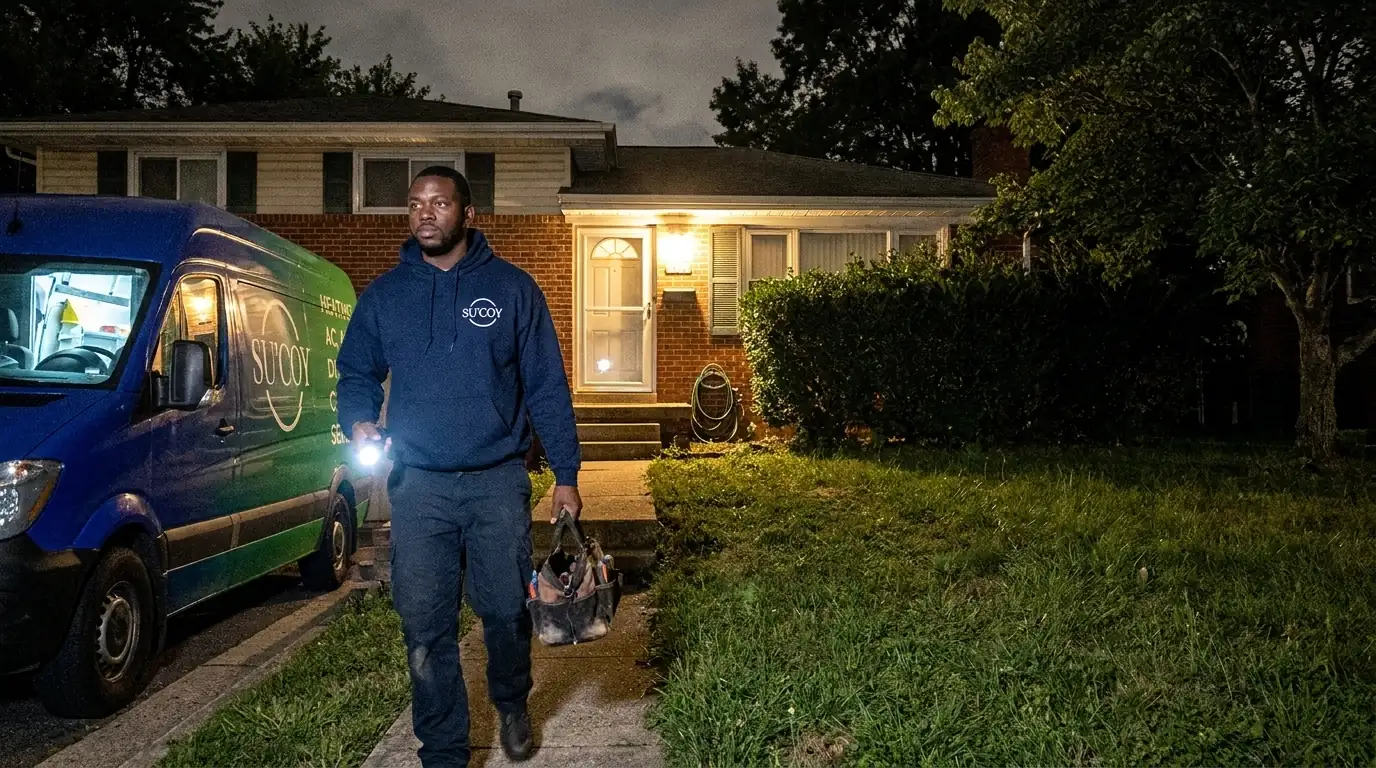
Boilers don't keep office hours. Our 24/7 emergency service is there for leaks, lost pressure and no heat at night, over a weekend or on a holiday. A hot-water system left cold on a freezing night can freeze in the pipes along outside walls. That's how a dead boiler turns into a burst pipe.
If It's Leaking or Losing Heat, Call
Water pouring from the boiler or its relief valve is an emergency. So is a gauge climbing past 30 psi, or no heat in freezing weather in a home with babies, older relatives or anyone who's ill. Smell gas? Leave the house first, then call 911 or Washington Gas from outside.
While You Wait for Us
Turn the boiler off at its emergency switch, often a red plate by the basement door. Leave the valves and drain alone, though, because a boiler fired with too little water can crack. If water is spreading, lift boxes and anything that plugs in off the floor.
Request Service
Boiler Repair Across Maryland and Northern Virginia
Radiator heat shows up most in older homes, and we repair those boilers from our base in Prince George's County out to Montgomery and Charles Counties. Across the Potomac, our Virginia license covers boiler repair in Northern Virginia too, including the older homes around Alexandria.
Town not on the list below? Ask, and we'll confirm whether we cover it.
Prince George's County
Charles County
Montgomery County
Northern Virginia

What Our Boiler Repair Customers Say
“SuCoy has serviced my units several times throughout the years and every experience has been exceptional. He assures that his team are knowledgeable and professional throughout their stay. I’ve been pleased with this company and will always refer and continue to use their services. They also provide reasonable prices and not out here scamming people. Great job SuCoy continue to provide top notch service!!!”

“Su’Coy Heating, AC & Duct Cleaning did a great job on our service call. The technician was professional and took the time to clearly explain exactly what the problem was and what needed to be done to fix it — no confusing jargon, just a straightforward, honest breakdown. It’s rare to find a company that communicates that clearly, and it made the whole experience stress-free. Highly recommend them for anyone who wants quality work and technicians who actually explains things instead of just handing you a bill.”

“Sucoys Heating, A/C and Duct Cleaning did an amazing job from start to finish. Very professional, on time, and knowledgeable. They explained everything clearly and made sure the work was done right. My system is running better than ever and the air quality in my home feels much cleaner. Great customer service, fair pricing, and quality work. I highly recommend them to anyone looking for reliable HVAC service!”

“Su’Coy HVAC by far has been the absolute Best HVAC company that we’ve used in the past 15 years. Prior to working with this company we had so many problems with all the other vendors in the county that we tried. But this company has been, excellent and provided excellent service and installation for my mother-in-law as well. The thing we appreciate the most is they always went out of out of their way to explain exactly what was going on with our systems and did not try to price gouge us!!!”

“I had a great experience with Su'Coy HVAC Company servicing my HVAC unit. The staff was amazing—professional, friendly, and helpful throughout the entire process. I was very pleased with the service I received and truly appreciated the overall experience. I definitely plan to use them again in the future and would recommend them to others looking for HVAC service.”

Boiler Repair FAQs
Why is my boiler pressure too high?
Most often the expansion tank has filled with water, or the fill valve lets in too much. Systems usually sit at 12 to 15 psi cold, and the relief valve opens near 30.
Why are my radiators cold at the top?
Air is trapped inside them. Bleed each radiator with a radiator key until water spits out, then check the boiler gauge, since bleeding lets the pressure drop.
Is it normal for a boiler to make noise?
A soft hum from the pump is normal. Banging, gurgling or a kettle-like rumble is not, and usually points to trapped air, scale or a failing pump.
Can I add water to my boiler myself?
Most systems refill on their own through an automatic fill valve. If the pressure keeps dropping, stop topping it up, because a hidden leak is draining the system.
Is a leaking boiler dangerous?
A small drip isn't an emergency, but it's a warning. Water reaching the burner or controls causes rust and shorts, so shut the system down if the leak spreads.
Does Su'Coy Heating, AC & Duct Cleaning repair boilers?
Yes. We repair hot-water boilers, from circulator pumps to zone valves, in homes across Prince George's, Montgomery and Charles Counties and Northern Virginia.
See Our Boiler Repair Work Up Close
Request Your RepairHeating Tips From Our Technicians

7 Tips for Affordable Furnace Installation Services
Optimize your furnace installation experience with 7 essential tips that can save you money—discover what you need to know before making a decision!
Read the article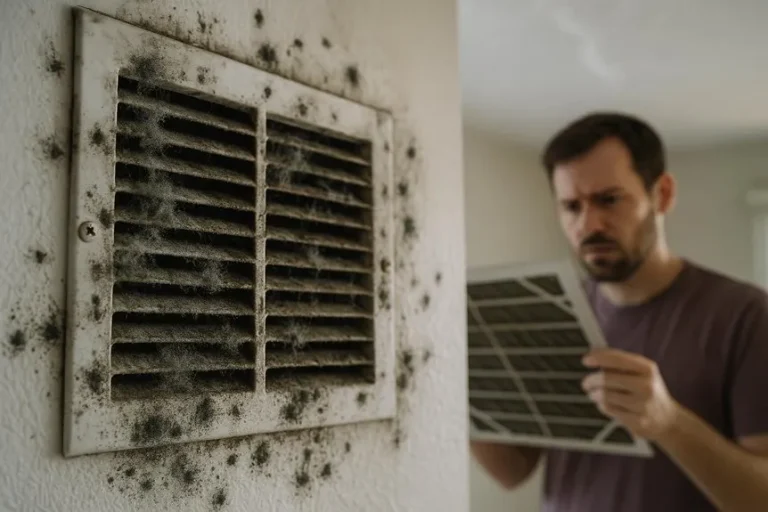
Is Your HVAC System Circulating Mold? 5 Red Flags Every Homeowner Should Know
You may not see mold inside your HVAC system, but you can often feel its effects.
Read the article
Tax Credits for Heat Pumps
Just imagine saving money and improving energy efficiency with tax credits for heat pumps; find out how before the deadline!
Read the article