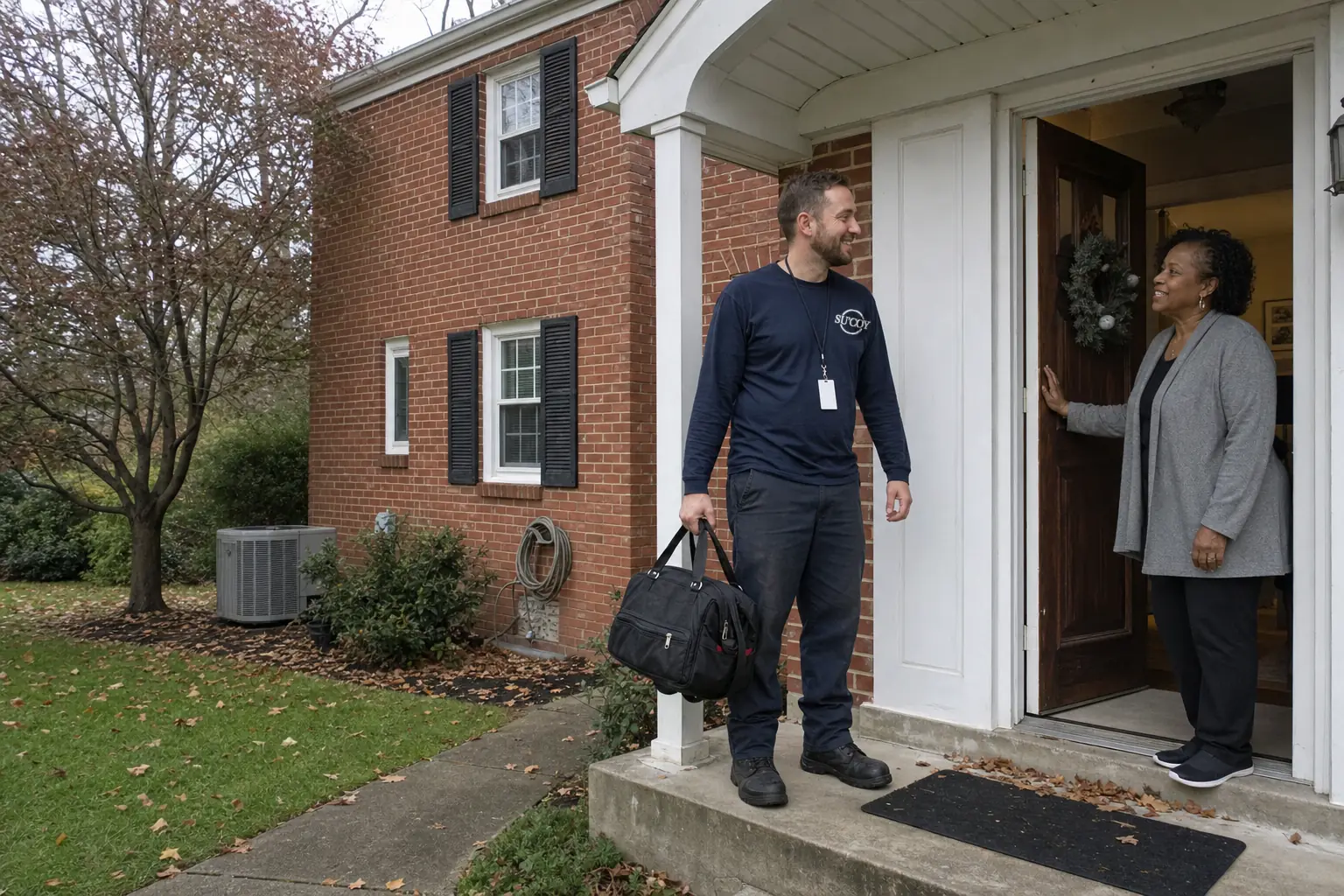
Furnace Repair Serving Prince George's, Montgomery & Charles Counties and Northern Virginia
- Igniters and flame sensors fixed
- Most major furnace brands repaired
- $150 diagnostic, credited to repair
Request Service
Why Your Furnace Stops Working on Cold Nights
When your house turns cold overnight, you want the heat back fast and a clear answer about what went wrong. Our furnace repair technicians start with that answer, in homes across Maryland and Northern Virginia. Around here, it usually traces back to the weather. A furnace sits idle through long, humid summers, then runs for hours on the first freezing nights.
That sudden switch is when a damp flame sensor, worn igniter or tired inducer motor gives out. So those are the parts we check first. We're licensed in both states, and you'll know exactly what failed and why before you agree to anything.


68 °F
The thermostat setting the Department of Energy suggests for winter while you're home and awake.
Once a year
How often the Consumer Product Safety Commission advises having a gas furnace and its venting inspected.
80% vs. 95%+
How much of the gas a standard furnace turns into heat, compared with a high-efficiency model.
35–65 °F
The usual rise between the air entering a gas furnace and the air leaving it.

Furnace Trouble You Can Hear, See and Smell
Small furnace faults get worse fast once freezing nights keep the burners firing back to back. Each sign below comes from a different part, so catching it early keeps the repair small.
Cold Air From the Vents
The blower runs, but the burners won't stay lit, usually because of a dirty flame sensor or a cracked igniter. After a few failed tries, the furnace locks itself out.
A Bang as the Burners Light
That's delayed ignition, where gas builds up for a second before dirty burners catch it. Each bang jolts the heat exchanger, and if it cracks, you're usually looking at a new furnace.
Heat That Comes and Goes
A clogged filter starves the furnace of air, so it overheats and the limit switch keeps cutting the burners. All those restarts wear out the igniter, turning one problem into two.
A Yellow, Flickering Flame
A healthy gas flame burns steady and blue. Yellow or orange means the gas isn't burning cleanly and can produce carbon monoxide. So switch the heat off and test your CO alarm.
A Squeal or Grind From the Cabinet
Worn bearings in the blower or inducer motor make that noise as they dry out. Ignore it, and the motor eventually seizes, taking your airflow and heat down with it.
A Gas Bill That Climbs Without Colder Weather
Caked burners or a choked filter make the furnace burn longer for the same warmth. Hold this month's Washington Gas or BGE bill against last year's, and a jump means wasted gas.
Most of the signs above point to a part we can repair. Once it's fixed, your furnace picks up right where it left off. A cracked heat exchanger is different, and so is a third repair in as many winters. That's when furnace installation and replacement is worth pricing, next to a heat pump installation that also cools in summer. Already warm again? A fall furnace tune-up keeps that flame sensor clean before the next freeze.
How Much Does Furnace Repair Cost?
Furnace repairs can cost anywhere from $250 for a small part to $2,000 for a bigger job. It really comes down to what's wrong. A flame sensor or igniter usually starts around $250, while an inducer motor or control board can cost $400 to $1,200. If it's the blower motor, you could be looking at $450 to $2,000. A cracked heat exchanger is a different story, and that's when we'll talk about whether replacing the furnace makes more sense.
The space around your furnace affects the cost, too, since tight attics and crawlspaces take longer to work in. Our diagnostic fee is $150, which goes toward your repair if approved. You'll get the full price in writing before work begins.
Repair or Replace Your Furnace?
The Heat Exchanger Usually Decides It
A furnace with a sound heat exchanger is usually worth repairing for many years. That one part keeps exhaust gases out of the air you breathe, so a crack changes the whole answer. The rest comes down to the points below.
| Usually worth repairing if… | Worth pricing a new furnace if… |
|---|---|
| The furnace is under about 15 years old | It's 20 years old or more |
| A flame sensor, igniter or motor failed | The heat exchanger is cracked |
| The burner flame is steady and blue | You see soot, rust or a yellow flame |
| Your gas bills have held steady | Gas bills keep rising with no change in use |
| It hasn't needed a repair in years | It's needed a repair every winter lately |
Why Homeowners Choose Us for Furnace Repair
Three Reasons to Trust Us With Your Heat
Your Repair Lasts the Whole Winter
A quick clean gets your heat back tonight, but a flame sensor that keeps getting dirty has a cause. We fix that too, whether it's a clogged filter or poor combustion air. So you get one repair that lasts the season, not another call in January.
You Pay for the Fix, Not the Hunt
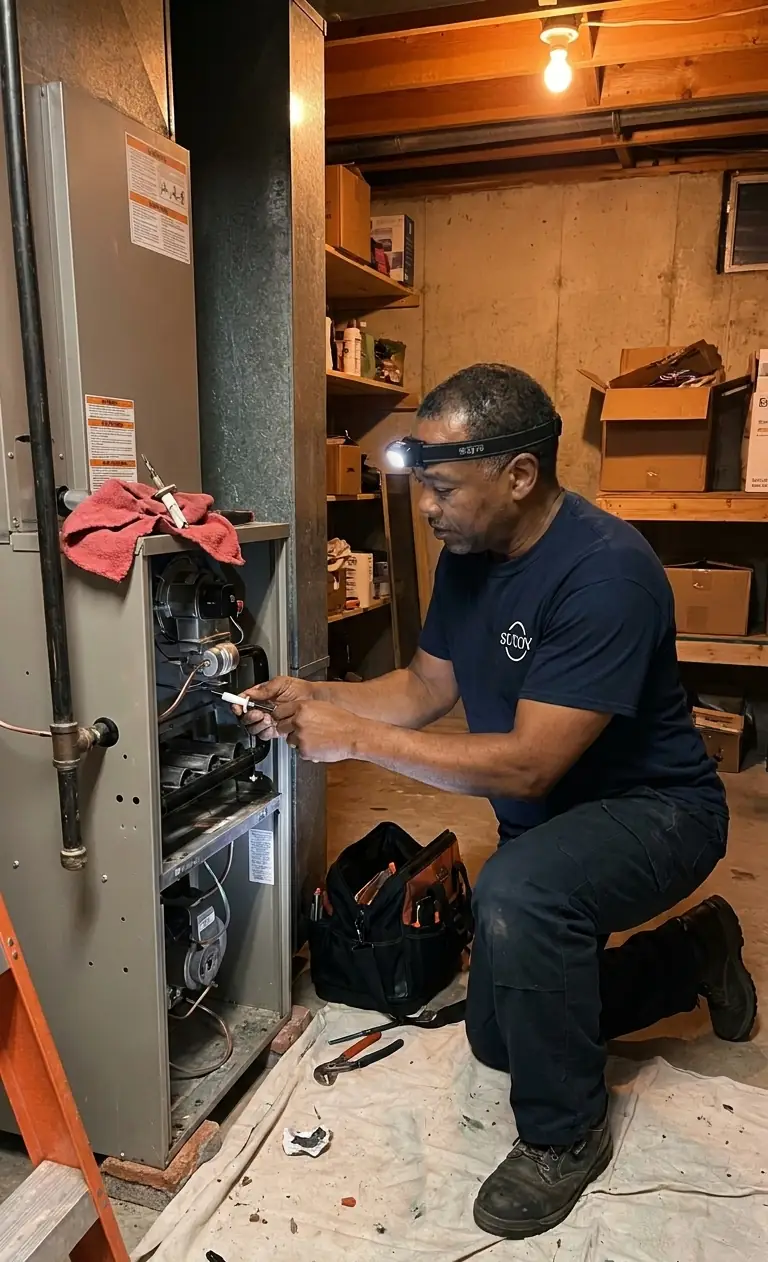
Our technicians read your furnace's fault code before they test a single part, so they head straight for what failed. Less time hunting means a smaller bill for you. Better yet, your heat comes back sooner on a freezing night.
A Straight Answer on an Older Furnace
Got a furnace that's 15 years old or more? We'll repair it when the repair makes sense, and tell you plainly when it doesn't. You'll never pay for a third patch on a furnace that's done, and you'll never be rushed into a new one.
How Our Furnace Repair Works
Four steps take you from no heat to a furnace you can trust.

Step 1: Describe the Problem
Let us know if it's blowing cold, cycling on and off or making noise. Mention a blank thermostat screen, too. That tells our technician which parts to check first.
Step 2: The Fault Gets Traced
Our technician tests the parts behind the problem, from the igniter to the inducer motor. You'll see the worn part and hear what wore it out.
Step 3: You Sign Off on the Price
You get the price in writing, with any other options set out beside it. Nothing gets replaced until you say yes.
Step 4: The Furnace Runs a Full Heating Cycle
With the new part in, your furnace goes from ignition to shutdown. Our technician then checks the temperature rise against the range printed on the furnace's label.
24/7 Emergency Furnace Repair
When a Cold House Can't Wait for Business Hours
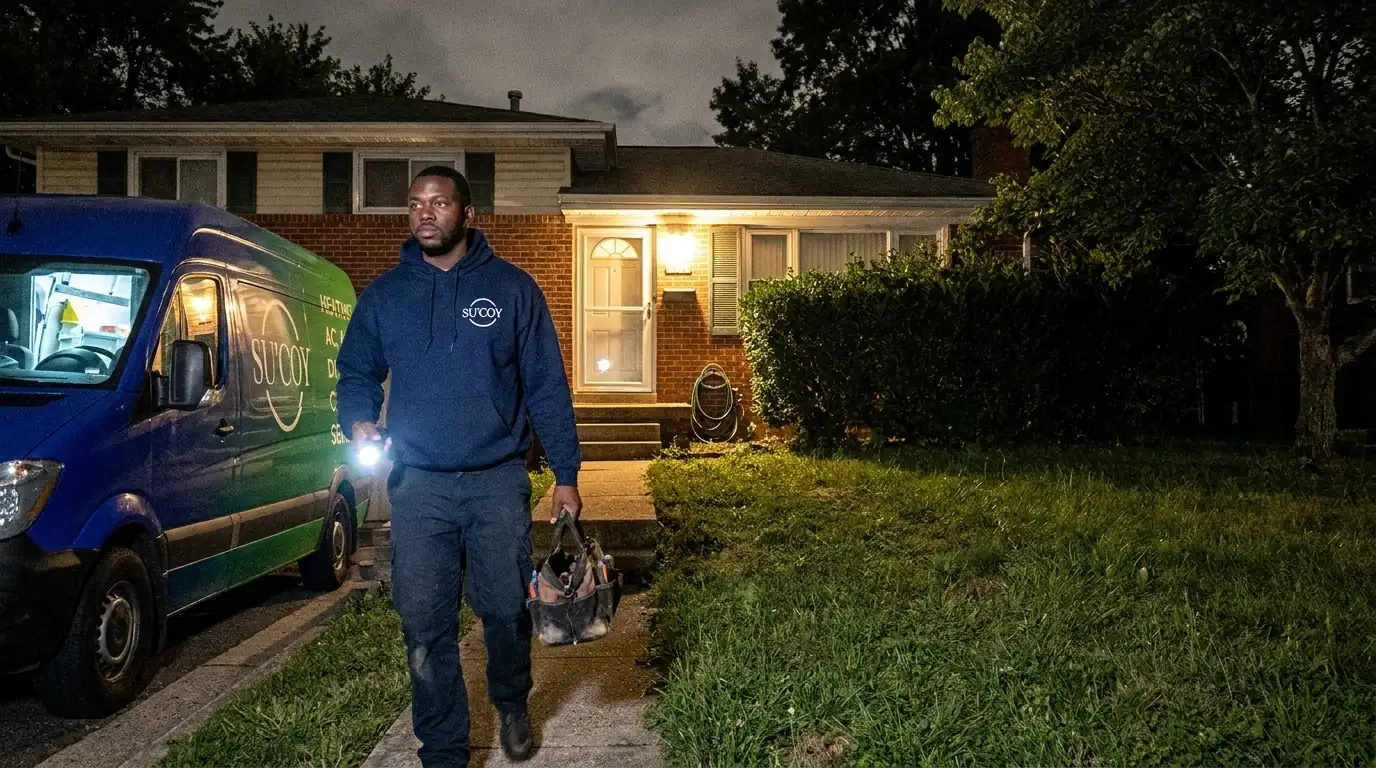
Emergency furnace repair is available 24/7, for furnaces that quit after hours, over a weekend or on a holiday. In a Maryland January, a house without heat cools quickly, and nobody should have to wait out a cold weekend.
Calls That Count as Emergencies
No heat in a home with little kids, older relatives or anyone who's ill is an emergency. A furnace that quits in below-freezing weather counts too. Smell gas or hear a carbon monoxide alarm? Get everyone outside first, then call 911 or your gas company.
Staying Warm Until We Get There
Close the doors to rooms you aren't using and gather everyone in one room. Open the cabinets under sinks on outside walls so some warm air reaches the pipes. Never heat the house with a gas oven or a grill.
Request Service
Furnace Repair Across Maryland and Northern Virginia
Our technicians repair furnaces from our Prince George's County base out to Montgomery and Charles Counties and Northern Virginia. You get the same trained team and the same safety checks in every county we cover.
If your town isn't listed below, ask anyway. We'll tell you straight whether we can get to you.
Prince George's County
Charles County
Montgomery County
Northern Virginia
What Our Furnace Repair Customers Say
“SuCoy has serviced my units several times throughout the years and every experience has been exceptional. He assures that his team are knowledgeable and professional throughout their stay. I’ve been pleased with this company and will always refer and continue to use their services. They also provide reasonable prices and not out here scamming people. Great job SuCoy continue to provide top notch service!!!”

“Su’Coy Heating, AC & Duct Cleaning did a great job on our service call. The technician was professional and took the time to clearly explain exactly what the problem was and what needed to be done to fix it — no confusing jargon, just a straightforward, honest breakdown. It’s rare to find a company that communicates that clearly, and it made the whole experience stress-free. Highly recommend them for anyone who wants quality work and technicians who actually explains things instead of just handing you a bill.”

“Sucoys Heating, A/C and Duct Cleaning did an amazing job from start to finish. Very professional, on time, and knowledgeable. They explained everything clearly and made sure the work was done right. My system is running better than ever and the air quality in my home feels much cleaner. Great customer service, fair pricing, and quality work. I highly recommend them to anyone looking for reliable HVAC service!”

“Su’Coy HVAC by far has been the absolute Best HVAC company that we’ve used in the past 15 years. Prior to working with this company we had so many problems with all the other vendors in the county that we tried. But this company has been, excellent and provided excellent service and installation for my mother-in-law as well. The thing we appreciate the most is they always went out of out of their way to explain exactly what was going on with our systems and did not try to price gouge us!!!”

“I had a great experience with Su'Coy HVAC Company servicing my HVAC unit. The staff was amazing—professional, friendly, and helpful throughout the entire process. I was very pleased with the service I received and truly appreciated the overall experience. I definitely plan to use them again in the future and would recommend them to others looking for HVAC service.”

Furnace Repair FAQs
Why does my furnace smell like burning when I first turn it on?
Usually it's dust. Dust settles on the heat exchanger over the summer and burns off within the first hour. If the smell lingers or turns electrical, switch the furnace off and call us.
Can I reset my furnace myself?
Once, yes. Turn it off at the service switch for a minute, then back on. If it locks out again, stop resetting it, because the fault behind it still needs testing.
How often should I change my furnace filter?
Check it monthly in winter. Most 1-inch filters need changing every 1 to 3 months. A thicker 4-inch media filter can last 6 to 12 months.
Do I need a carbon monoxide alarm if I have a gas furnace?
Yes. The CPSC advises one on every level and outside each sleeping area. Carbon monoxide has no smell, so an alarm is your only warning of a leak.
Will a gas furnace work during a power outage?
No. It needs electricity to run its igniter, inducer motor, blower and control board. So when the power goes out, your house stays cold until it's restored.
Does Su'Coy Heating, AC & Duct Cleaning repair furnaces in Northern Virginia?
Yes. Homes in Alexandria, Arlington and nearby Northern Virginia communities are covered by our Virginia master HVAC license. The same technicians cover Maryland and Virginia homes.
See Our Furnace Repair Work Up Close
Request Your RepairHeating Tips From Our Technicians
7 Tips for Affordable Furnace Installation Services
Optimize your furnace installation experience with 7 essential tips that can save you money—discover what you need to know before making a decision!
Read the article
Is Your HVAC System Circulating Mold? 5 Red Flags Every Homeowner Should Know
You may not see mold inside your HVAC system, but you can often feel its effects.
Read the article
Tax Credits for Heat Pumps
Just imagine saving money and improving energy efficiency with tax credits for heat pumps; find out how before the deadline!
Read the article