 Skip to content


The DCSEU heat pump rebate pays up to $5,000. The exact amount depends on the fuel you replace and how efficient the new heat pump is. Households that meet the income limits have a second path, where the whole switch to electric equipment costs nothing.
How the DC Sustainable Energy Utility Works
The DC Sustainable Energy Utility, or DCSEU, runs the District's energy-saving programs. It works for the Department of Energy and Environment, or DOEE. This is not your electric company. Instead, it pays rebates and gives technical help to homes and businesses.
DCSEU's residential rebates help pay for efficient equipment. Any District resident can apply, whatever their income. Each rebate has its own equipment rules, so check them before you buy.
The District also has a long-term goal. A 2024 District law set up the Breathe Easy Program within DOEE. By December 31, 2040, it aims to give 30,000 low-income households free electric upgrades.
The Federal Heat Pump Credit Has Ended
Many DC homeowners once counted on a federal tax break for heat pumps. The IRS says that credit only covers upgrades made through December 31, 2025. So it does not apply to heat pumps put in since then.
Even so, federal money still reaches some homes. DOEE uses federal Home Energy Rebates funds to grow two DCSEU programs for low-income homes, both covered below. DOEE says these federally funded rebates are not available anywhere else.
That leaves two paths for most homeowners. Households under the income limits use the low-income program. Everyone else uses the standard DCSEU rebates. Either way, pick your path before you sign a contract.
Which DC Programs Cover Heat Pumps?
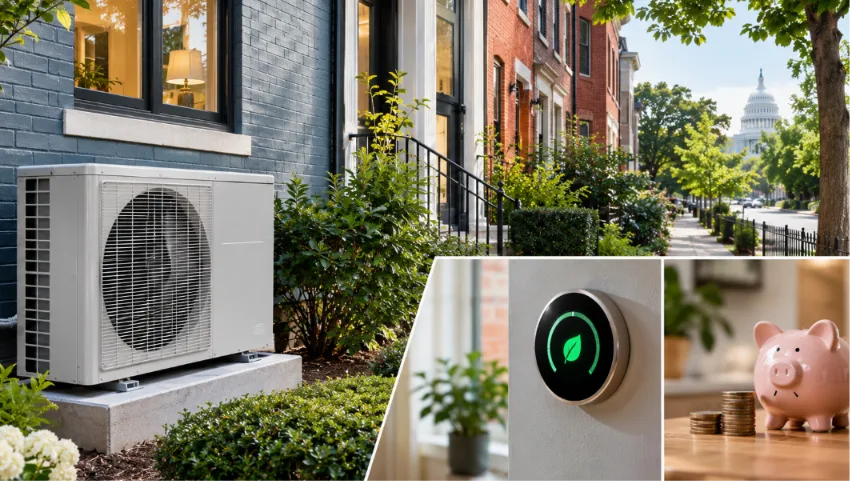
Five sources of help cover most homeowners. Each has its own rules and its own form. However, you cannot combine the standard DCSEU rebates with any other DCSEU or District offer.
DCSEU Electrification Rebates
This is the program most homeowners use. DCSEU stopped paying rebates for home gas furnaces and boilers in August 2021.
Affordable Home Electrification Program
The Affordable Home Electrification Program, or AHEP, pays for a full move to electric equipment in income-qualified homes. You apply with DCSEU. Then it links you with a qualified contractor.
Help for Affordable Apartment Buildings
AHRA, the Affordable Housing Retrofit Accelerator, is for eligible affordable apartment buildings. It does not cover single homes. If you own or manage one, start here for heat pumps and related energy work.
Panel and Circuit Upgrade Rebates
DCSEU also pays toward some panel and circuit work when you switch from gas or oil. Check the amounts on its electrification rebates page before work starts.
Free Electrify DC Coaching
Electrify DC gives District residents a free home energy coach at any income level. A coach helps you compare options, plan the work and understand the costs.
Choose the Program Before the Equipment
Standard DCSEU rebates pay out after you buy, so it is tempting to install first and sort out the paperwork later. That order only works if the system meets the program's rules on the day of purchase.
Each rebate tier sets minimum efficiency ratings for the outdoor unit and the indoor coil. So a heat pump that misses its tier cannot earn a rebate once you have paid for it.
Ask for the model numbers on every quote. Then check them against the tier you are aiming for before anything is installed.
DCSEU Heat Pump Rebate Amounts
These amounts come from DCSEU's current heating and cooling rebate form and water heating rebate form. ENERGY STAR Most Efficient is the higher of the two heat pump tiers.
| Equipment | Replacing electric | Replacing gas |
|---|---|---|
| Air-source or ductless mini-split heat pump, ENERGY STAR Certified | $1,000 | $4,000 |
| Air-source or ductless mini-split heat pump, ENERGY STAR Most Efficient | $1,500 | $5,000 |
| Heat pump water heater, lower tier | $750 | $1,200 |
| Heat pump water heater, top tier | $1,000 | $1,600 |
Total rebates are capped at $15,000 per household each program year. A rebate can never be more than the price you paid for the equipment.
What Do Older DC Homes Need First?
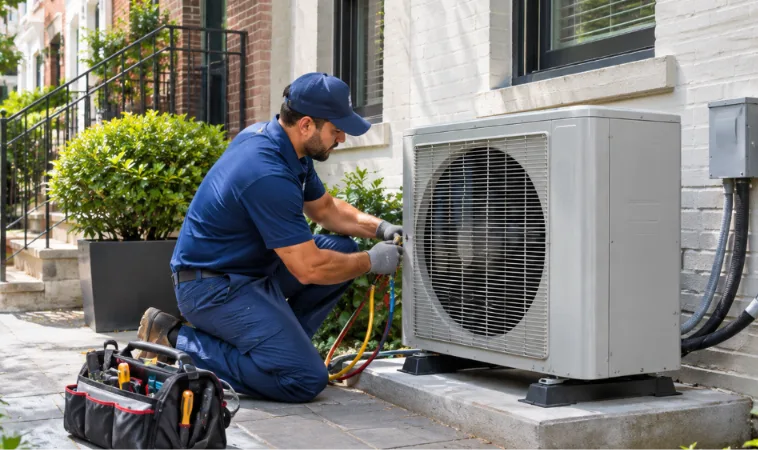
Many District homes were built long before heat pumps were common. Rowhouses, historic homes and older detached houses often need extra work. Knowing these needs ahead of time keeps the quote accurate and the project on schedule.
- Older electrical panels may need an upgrade to carry a heat pump.
- Rowhouses with little or no ductwork often suit ductless mini-splits better than central systems.
- Oil or gas equipment either comes out or stays as a backup.
- Small yards and alleys limit where the outdoor unit can go.
- Some exterior changes in historic districts need review first.
A good assessment covers each item before anyone writes the quote. That way you plan the electrical work from the start, and nothing surprises you or the rebate program partway through the job.
How to Apply for a DCSEU Rebate
Apply online at rebates.dcseu.com or by mail within six months of purchase. If you are leaving gas behind, add proof of the switch. DCSEU recommends photos of the gas line before the job and of the capped line after.
Keep the new system in place for at least one year, or DCSEU can ask for part of the rebate back. It may also ask to inspect the work, so keep your invoices and photos together.
Su'Coy HVAC Heat Pump Installation and Repair
The right rebate starts with equipment chosen before you buy. Our heat pump installation team can help you weigh a new system against a repair. When an old system costs more to fix than it's worth, we'll tell you, even if it means a smaller job for us.
Su'Coy HVAC is a heating, cooling and duct cleaning company from Temple Hills, and we've been at it since 1996. Our founder trains every technician who works here. Ask us about our Comfort Guardian Plan. You can also see the areas we serve.
Call us to talk through your heat pump options.
[Call (301) 888-0037]
Frequently Asked Questions
Can condo owners get DC Sustainable Energy Utility rebates?
Yes. DCSEU's rebate terms cover owners of individual condo and co-op units. They also cover owners and tenants of homes with four units or fewer. The equipment must be new, sit at a District address and connect to the utility account named on the application.
Do you pay tax on a DCSEU rebate?
You might. DCSEU's terms say the IRS may treat a rebate as taxable income, and DCSEU is not responsible for that tax. You also pay any sales tax on the full price before the rebate. Ask a tax adviser how your rebate should be reported.
Who can join the Affordable Home Electrification Program in DC?
AHEP is for income-qualified District homeowners and tenants. DCSEU describes it as free for qualified residents in single-family homes of up to four units. Income limits apply, and DCSEU reviews your documents before it confirms you are eligible, so have proof of income ready.
When do the current DC heat pump rebates end?
The current DCSEU program year runs from October 1, 2026, to September 30, 2027. DCSEU must approve every request by September 30, 2027. Offers depend on available funds and can change at any time without notice, so apply soon after your system is installed.
What paperwork does a heat pump installation in DC need?
DCSEU asks for a Department of Buildings permit and the AHRI certificate for the heat pump. You also need a dated invoice with the contractor's name, the make, model and serial numbers, the install date and the total paid. The contractor adds a materials invoice from its supplier.


