Skip to content


On a cold Washington night the heat pump kicks on and never shuts off, the house sits a degree or two cool, and the next electric bill lands higher than you expected. It is natural to assume the unit is failing, but acting on that assumption is how homeowners end up paying for a repair the system never needed. This guide shows you how to tell the normal case from the handful of genuine faults.
A heat pump that runs constantly on a cold night is usually doing its job, not failing. As the outdoor temperature drops, the unit pulls less heat from the air and must run longer to keep up, and below its balance point the electric backup heat joins in. Constant running becomes a concern only when the house keeps losing temperature, the unit short-cycles, or the outdoor coil stays caked in ice. Everything below helps you decide which of those you are looking at.
Is It Normal for a Heat Pump to Run Constantly in Cold Weather?

Usually, yes. A heat pump runs constantly on the coldest nights because that is when it has the least heat to work with and the most to deliver. Most air-source units reach a balance point in the 25 to 35 degree range, below which the unit alone cannot meet the whole load and backup heat assists.
NOAA’s 1991 to 2020 Climate Normals put the January average low at Reagan National near 30 degrees, so Washington’s cold snaps routinely push overnight temperatures near or below that balance point range. The longest run times line up with the coldest nights for exactly that reason.
Housing matters too. Older rowhouses and mid-century homes with modest insulation and leaky envelopes carry a higher heat load, so two neighbors with identical units see markedly different run times.
Modern variable-speed equipment makes this more pronounced. An inverter-driven compressor runs long at a low, steady speed instead of switching fully on and off, which is quieter and more efficient but looks alarming if you expect the old start-stop rhythm.
Before approving any part replacement, have the balance point and auxiliary heat operation checked against the measured outdoor temperature, since long runs during a cold snap are usually normal rather than a fault. Reading those numbers is most of the job, and it is the part a heat pump repair visit should start with. The next section explains the mechanism.
How Does Cold Weather Change the Way a Heat Pump Runs?
A heat pump does not burn fuel to make heat. It moves heat from the outdoor air into your house, the same process a refrigerator runs in reverse. When it is mild outside there is plenty of heat in the air to move, so the unit cycles on and off comfortably.
As the air cools, there is less heat available to extract. The unit then has to work harder and longer to deliver the same warmth indoors, which is why the same system feels tireless in October and relentless in January.
The capacity loss is steep, and it is a published figure rather than an estimate. Manufacturers rate heating output at two outdoor temperatures, 47 degrees and 17 degrees, and an air-source unit commonly sheds roughly a third of its output between those two rating points. The exact curve varies by model, but the pattern holds across all of them.
That is why a system which cycled calmly in October runs nearly without pause in January. Nothing has broken; the physics changed. Reading a long run as expected behavior instead of a warning is the first step. It also sets up the next question, because the longer the heat pump falls short, the more that backup heat runs, and that is what shows up on the bill.
Why Do Auxiliary Heat Strips Raise Your Electric Bill?
Auxiliary heat strips are banks of electric resistance coils inside the air handler, the indoor cabinet holding the blower that distributes warm air through your ducts. When the heat pump cannot meet the load alone, the thermostat energizes these strips to make up the difference. They warm the house the expensive way.
The efficiency gap explains your bill. Resistance strips deliver about 1 unit of heat per unit of electricity drawn, while the heat pump typically delivers 2 to 3 units per unit. So every hour the strips run, you pay two or three times as much for the same warmth.
Put a number on it. A 10 kW strip bank running eight hours uses 80 kWh, against roughly 24 kWh for the heat pump it is backing up. Multiply that by the supply rate on your Pepco statement and a single cold snap explains itself, which is why these bills arrive without warning.
Older local housing compounds it. A rowhouse with modest insulation loses heat faster, pushing the system below its balance point sooner and keeping the strips working longer. Worth knowing, because the fix is not always equipment. Sometimes the strips do exactly what they should, and the bigger lever is the envelope.
Normal Heat Pump Running vs a Fault: How to Tell Them Apart
Runtime alone does not tell you much. What the house is doing while the unit runs, and how the thermostat is reading, is where the diagnosis lives. These five scenarios cover almost everything a homeowner sees.
The House Is Holding Temperature
If the thermostat is sitting at or near your setpoint while the unit runs steadily, this is the normal case. The heat pump is matching the heat loss of the house, which is exactly what it should do on a cold night. A degree of droop during the coldest hours is expected and not a fault. There is nothing to fix here, and switching settings will usually make the bill worse, not better.
The House Keeps Losing Temperature
If the setpoint is 68 but the room keeps drifting down to 64 and lower while the unit runs nonstop, that is a warning sign. It means output is falling short of demand by a wide margin. Causes range from a dirty filter to low refrigerant charge to failed auxiliary heat to a badly undersized system. This one warrants a service call, especially if it worsens night over night.
The Unit Short-Cycles Instead of Running Long
Long, steady running is healthy. The pattern to worry about is the opposite: the unit starts, runs a few minutes, stops, then restarts again and again. Short-cycling stresses the compressor and often points to a refrigerant problem, a control fault, or a sensor reading wrong. If you are counting several starts in an hour instead of one long run, have it looked at before more damage accumulates.
The Outdoor Coil Stays Caked in Ice
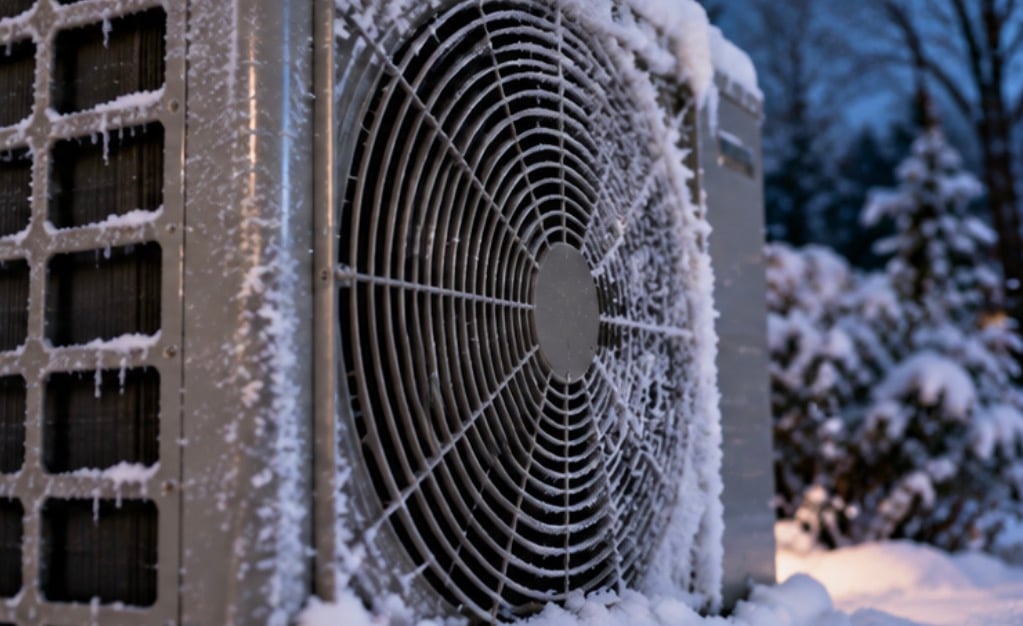
A light frost on the outdoor unit in cold weather is normal and clears on its own. A solid shell of ice that never melts, covering the coil for hours, is a fault. It usually means the defrost cycle has failed or a sensor is misreading. Ice blocks airflow and strangles the unit’s ability to pull heat, so the system runs constantly and still cannot keep up. Shut it off and call.
Emergency Heat Is Switched On by Mistake
If someone flipped the thermostat to emergency heat, the heat pump is locked out and only the expensive strips are running. The house may stay warm, but the bill climbs fast and the unit seems to run forever. Check the setting first; this is the lowest-cost fix on the list and the one most often overlooked. Return it to normal heat unless the heat pump has genuinely failed.
Those five cover the triage. The one that fools the most people is the defrost cycle, which deserves its own section.
Is the Heat Pump Defrost Cycle Making It Look Like It Never Stops?
On a damp, cold night the outdoor unit may suddenly steam, change pitch, and run strangely for a few minutes before settling back down. That is the defrost cycle, and it is normal.
Moisture in the cold air condenses and freezes on the outdoor condenser coil, the finned coil where the unit absorbs heat from the outdoor air. Frost insulates that coil and cuts performance, so the system briefly reverses to melt it off.
DC’s winter cold tends to be damp rather than bone-dry, which frosts coils readily, so defrost cycles run often through the heating season. A healthy defrost is brief and self-clearing. The problem case is a coil that stays encased in ice the unit never resolves. Here is how the two compare:
| What you observe | Healthy defrost | A genuine fault |
|---|---|---|
| Duration | A few minutes, then back to heating | Ice persists for hours or all night |
| Steam | Rises off the coil, then stops | No steam; coil stays frozen solid |
| House temperature | Holds steady | Keeps dropping |
| Why it matters | The cycle did its job and cleared the frost | Blocked airflow starves the unit and it cannot keep up |
If what you see matches the left column, there is nothing to fix. If it matches the right, the defrost control or a sensor likely needs attention. That distinction is what keeps a two-minute normal event from being mistaken for a breakdown, and it is the single most misread symptom a technician hears about.
What Can You Check on Your Heat Pump Before Calling?

A few safe checks can resolve this or sharpen the service call. Start with the air filter. A clog chokes airflow, so the system runs longer for less heat. Check it every 30 to 90 days during heating season, more often in a dusty older home. Loading within weeks points at duct leakage.
Check these before paying for a visit.
- The filter, replaced if it looks gray or clogged
- The thermostat mode, set to heat rather than emergency heat
- The overnight setback, since a deep one forces a long morning recovery
- Supply and return vents, open and clear of furniture or rugs
- The outdoor unit, clear of leaves, snow and drifted debris
- Any coil ice, noting whether it clears within a few minutes
The thermostat deserves a second look. A large setback, dropping to 60 overnight, forces a long morning catch-up that looks like the unit never stops, and the strips usually come on to deliver it. A programmable thermostat set up for gentle recovery avoids that.
Anything beyond these checks, including refrigerant, the defrost board, the strips, or a sealed system reading, belongs to a professional. Our guide on how to maintain your heat pump in DC covers the routine upkeep between visits. If the basics are clean and the house still loses ground, it is time to make the call.
Frequently Asked Questions About Heat Pumps Running Nonstop
Should I switch my thermostat to emergency heat when the heat pump runs nonstop?
No. Emergency heat runs the expensive electric strips alone and locks out the efficient heat pump, which raises your bill. Leave it on normal heat unless the heat pump itself has failed and you need temporary warmth until a technician arrives.
At what temperature does a heat pump stop keeping up in DC?
Most air-source units begin leaning on backup heat somewhere around 25 to 35 degrees, depending on the model and your home’s insulation. Below that the heat pump still works, just more slowly, which is why cold nights mean long runs rather than a broken unit.
Will running nonstop damage my heat pump?
Continuous running at low demand does not harm a unit designed for it, and variable-speed models are built to run long. The pattern that wears components is short-cycling, where the unit starts and stops every few minutes. One long run is healthy; many short ones are not.
Why does my outdoor unit steam and get loud for a few minutes, then go quiet?
That is the defrost cycle. The unit briefly reverses to melt frost off the outdoor coil, which produces steam and a change in sound. It clears in a few minutes and is normal in DC’s damp winter cold, so there is nothing to fix.
Is a heat pump that runs constantly a sign it was sized too small?
Sometimes, but not usually. Before assuming undersizing, rule out a dirty filter, a low thermostat setback, a frosted coil, and envelope leaks. Have the balance point and auxiliary heat checked before anyone recommends a larger system, since a new unit is the most expensive answer.
Why Choose Su’Coy Heating, AC & Duct Cleaning for Heat Pump Service in Washington, DC?
A heat pump running for long periods during cold DC nights does not automatically mean something is wrong. Since 1996, Su’Coy Heating, AC & Duct Cleaning has served the area, helping homeowners assess heating performance, outdoor conditions, and whether the system is operating as expected.
A proper diagnosis can help distinguish normal cold-weather operation from issues involving auxiliary heat, defrost cycles, refrigerant charge, or equipment capacity. If your system is aging or struggling to heat your home, heat pump installation may be worth considering after its heating needs and performance have been evaluated.
If your heat pump runs nonstop and your energy bills have climbed unexpectedly, ask Su’Coy Heating, AC & Duct Cleaning to check its operation before replacing parts. Call (301) 888-0037 to request a free estimate. Regular service through the Comfort Guardian Plan can also help identify developing issues before the next cold spell.