Skip to content

You may not see mold inside your HVAC system, but you can often feel its effects. A home that smells slightly musty, feels heavier than usual, or triggers allergies indoors can be an early sign that something is circulating through your air system.
In DMV Area, where humidity levels rise quickly during spring and summer, HVAC systems can become a hidden source of mold growth. Understanding the early warning signs helps you act before it impacts your indoor air quality and overall health.
What It Means When Mold Circulates Through Your HVAC System

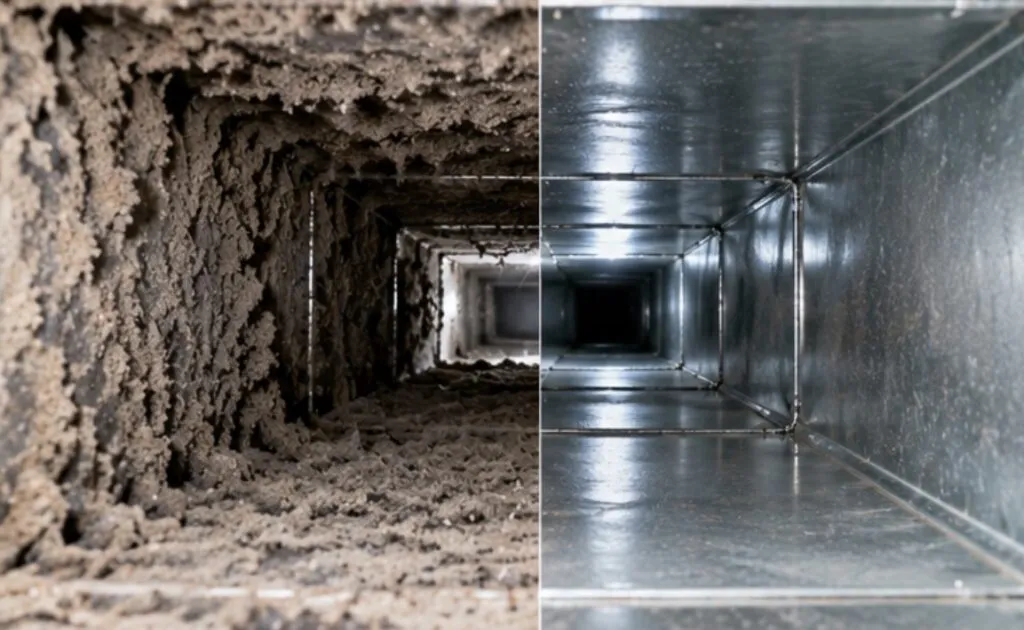
When mold develops inside your HVAC system, it does not stay contained in one place. As the system runs, air passes through contaminated components like coils, ducts, and vents, carrying mold spores throughout your home. This turns your HVAC system into a distribution point for airborne contaminants.
In practical terms, this means every cooling cycle can spread microscopic mold particles into living spaces. Over time, this affects indoor air quality, triggers allergies, and creates persistent odor issues. Many homeowners mistake these signs for general dust or humidity problems, which delays proper action.
Where mold typically forms inside HVAC systems:
- Evaporator coils where condensation builds up
- Drain pans with standing water
- Duct interiors with dust and moisture
- Air vents exposed to humid airflow
Understanding these problem areas helps identify why professional inspection and cleaning are often necessary.
Why HVAC Systems in the DMV Are Prone to Mold Growth
The DMV region creates ideal conditions for mold growth due to a combination of humidity, temperature changes, and system usage patterns. During spring and summer, outdoor humidity levels remain high, and indoor environments often trap that moisture.
HVAC systems in this region run frequently to manage temperature, but if they are not properly maintained, they can struggle to remove moisture effectively. This creates damp internal conditions where mold can develop, especially in systems with poor airflow or drainage issues.
Factors that increase mold risk in HVAC systems:
- High seasonal humidity levels in the DMV
- Condensation buildup inside cooling components
- Dirty filters and restricted airflow
- Lack of regular duct cleaning and system maintenance
In many homes, mold growth develops gradually and often goes unnoticed until it begins to impact comfort and indoor air quality. Let’s take a closer look at the key red flags that can indicate your HVAC system may be circulating mold.
Red Flag #1: Musty or Damp Odors Coming From Your Vents

A persistent musty smell when your HVAC system turns on is often one of the earliest indicators of mold developing inside the system. This odor is not coming from the room itself, but from air passing through damp components such as evaporator coils, drain pans, or duct interiors where moisture has been sitting. It tends to be more noticeable after the system has been off, because trapped moisture allows microbial growth to intensify before airflow begins again.
Unlike temporary odors caused by cooking or outdoor air, this type of smell returns consistently with system operation. Over time, it can spread across multiple rooms, making the entire home feel less fresh even after cleaning. This is a strong sign that the issue is within the HVAC system and requires more than surface-level fixes.
What homeowners typically notice:
- A recurring musty or “damp basement” smell each time the AC starts, especially after idle periods
- Odor intensity varies by room, often stronger near vents or areas with lower airflow circulation
- Smell lingers in the air and does not go away with regular cleaning or air fresheners
- Indoor air feels heavy or stale, particularly during longer cooling cycles in humid conditions
These patterns usually indicate internal moisture buildup combined with airflow through contaminated components. Addressing the root cause often requires a detailed system inspection and professional duct cleaning to remove the source of the odor and restore clean airflow.
Red Flag #2: Increased Allergy or Respiratory Symptoms Indoors
When mold spores circulate through your HVAC system, they directly impact indoor air quality and health. Unlike outdoor allergies, these symptoms tend to worsen when you are inside your home and improve when you leave, which is a key indicator.
In many DMV homes, homeowners notice recurring symptoms without realizing the source is their HVAC system. Since mold spores are microscopic, they travel easily through airflow and can continuously trigger reactions.
Common indoor health indicators:
Frequent sneezing
Sneezing that continues or worsens indoors, even in a clean environment, often points to airborne irritants circulating through your HVAC system. Mold spores can trigger these reactions repeatedly, especially when the AC is running and distributing contaminated air.
Eye irritation
Burning, itching, or watery eyes while indoors can indicate poor air quality caused by mold or moisture buildup. These symptoms often become more noticeable when the HVAC system is operating, as it spreads microscopic particles throughout your living space.
Respiratory issues
Mild coughing, throat irritation, or breathing discomfort that occurs mainly indoors can be linked to contaminated airflow. Mold spores and excess humidity can irritate the respiratory system, especially during longer AC cycles when air circulation increases.
Fatigue indoors
Feeling unusually tired, uncomfortable, or low on energy while at home may be connected to poor indoor air quality. Continuous exposure to mold spores and stale air can affect overall comfort and well-being, even without obvious visible signs of contamination.
If these symptoms appear consistently, it may be time to consider professional mold testing to identify hidden contamination inside your system.
Red Flag #3: Visible Mold or Dark Spots Around Air Vents

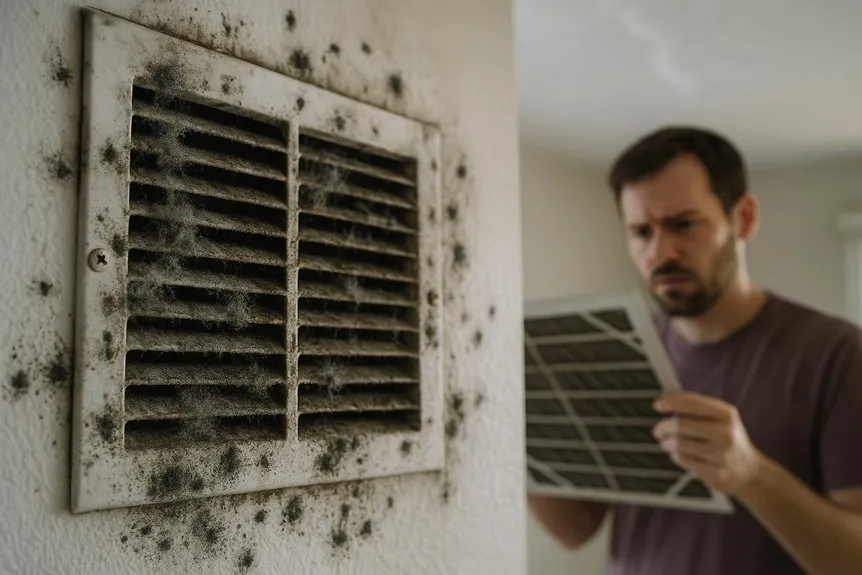
Visible mold is a more advanced warning sign and should not be ignored. Dark spots or discoloration around vents, ceilings, or duct openings usually indicate that mold has already developed and is spreading through airflow.
In real situations, homeowners often try to clean these spots, but they return quickly because the source remains inside the HVAC system. Surface cleaning does not solve internal contamination, which continues to circulate through the air.
| Where You See It | What It Indicates |
|---|---|
| Around air vents | Mold inside duct system |
| Ceiling near vents | Moisture buildup and airflow issues |
| Vent covers | Contaminated airflow passing through |
Addressing this issue requires more than cleaning. Professional mold remediation service ensures the contamination is removed at its source, not just on visible surfaces.
Red Flag #4: Weak Airflow and Stale Indoor Air
Mold buildup inside ducts and system components can restrict airflow and reduce overall system performance. As contamination builds up, air circulation becomes less effective, leading to stagnant and stale indoor air.
This is often misdiagnosed as a simple airflow issue, but in many cases, the restriction is caused by internal buildup combined with moisture. Homes may feel less ventilated, even when the system is running continuously.
What homeowners experience:
Weak airflow
Air coming from vents feels noticeably weaker than before, especially in rooms farther from the main unit. This often indicates internal blockages or buildup inside ducts that are restricting airflow and preventing proper circulation throughout the home.
Stale indoor air
Indoor air may feel heavy, dull, or lacking freshness even when the system is running regularly. This happens when contaminated air continues to circulate without proper filtration or ventilation, reducing overall air quality and comfort.
Uneven circulation
Certain areas of the home may feel more stagnant than others, with some rooms receiving less airflow. This imbalance is often caused by duct restrictions or contamination, leading to inconsistent comfort levels across different parts of the house.
Longer Runtime
The HVAC system may run for extended periods without achieving the desired comfort level. This is because restricted airflow and contamination reduce system efficiency, forcing it to work harder to maintain temperature and air quality.
In these cases, combining mold testing with professional duct cleaning helps identify and resolve the underlying issue.
Red Flag #5: Excess Indoor Humidity or Persistent Dampness
Humidity plays a major role in mold growth. When your HVAC system fails to remove moisture effectively, indoor humidity rises, creating the perfect environment for mold to develop and spread.
In the DMV area, where outdoor humidity is already high, even small inefficiencies in your system can lead to noticeable indoor dampness. This often shows up as a constant “heavy” feeling in the air or surfaces that never fully dry.
| Humidity Issue | Impact on Home |
|---|---|
| High indoor moisture | Promotes mold growth |
| Damp surfaces | Encourages bacteria and odors |
| Poor dehumidification | Reduces comfort and air quality |
| Continuous moisture cycle | Increases system strain |
If these conditions persist, professional mold remediation service combined with system inspection helps restore proper moisture control and prevent further contamination.
How Professional Duct Cleaning and Mold Inspection Solve the Problem
Once mold enters your HVAC system, surface cleaning is not enough. The issue must be addressed at the source, which often includes internal ductwork, coils, and moisture-prone components.
Professional services combine inspection, testing, and targeted cleaning to eliminate contamination and prevent it from returning. This approach not only improves air quality but also restores system performance.
What professional solutions include:
- System inspection – A thorough evaluation to locate moisture sources, airflow issues, and areas where mold may develop
- Mold testing – Advanced testing methods to detect mold presence, identify spore types, and assess contamination levels
- Duct cleaning – Deep cleaning of duct interiors to remove dust, debris, and mold buildup affecting airflow and air quality
- Targeted remediation – Professional removal and treatment of mold at the source to prevent regrowth and further contamination
Choosing the right HVAC contractor ensures these issues are properly diagnosed and resolved at the source, not just temporarily treated. A qualified professional will follow a thorough process to eliminate contamination, restore airflow, and protect your indoor air quality for the long term.
Why Choose Su’Coy HVAC for Mold Inspection and Duct Cleaning in the DMV Area

Mold issues in HVAC systems require more than basic cleaning. They require a clear understanding of how airflow, moisture, and system performance interact, especially in the humid conditions of the DMV.
At Su’coy HVAC, the focus is on identifying the root cause of mold growth and providing complete solutions through professional mold testing and mold remediation services. Every inspection is designed to detect hidden issues and restore safe, clean airflow throughout your home.
If you are noticing warning signs like odors, humidity, or reduced air quality, addressing the problem early helps protect your home, your health, and your HVAC system from long-term damage.