Skip to content

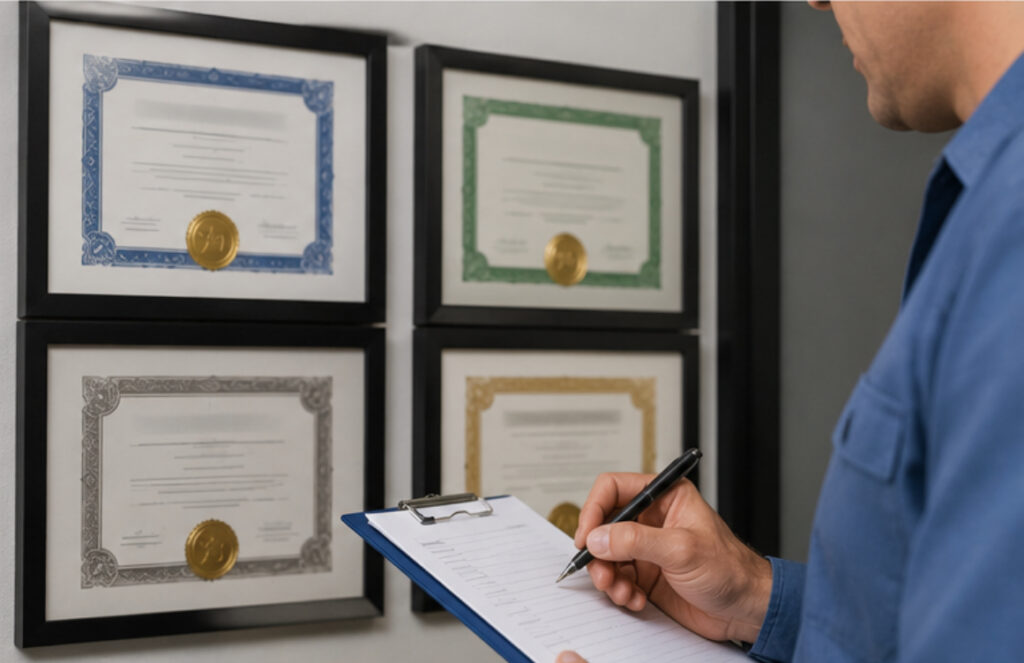
When your air conditioner stops working in the middle of a Washington, DC summer, it’s easy to book the first company with an available appointment. However, the technician repairing your system should have the training and qualifications needed to diagnose the problem correctly. The right certifications help demonstrate that an HVAC professional understands refrigerant handling, electrical safety, manufacturer procedures, and current industry standards.
While certifications alone don’t guarantee quality workmanship, they do show that a technician has invested in professional training and continuing education. Before scheduling AC repair, it’s worth asking about the qualifications behind the company you’re inviting into your home.
Why Do HVAC Certifications Matter for AC Repairs?

Modern air conditioning systems are much more advanced than they were just a decade ago. Variable-speed compressors, communicating thermostats, ECM blower motors, and high-efficiency refrigerants require specialized knowledge to diagnose and repair correctly. An incorrect repair can reduce system efficiency, shorten equipment life, or even void parts of the manufacturer’s warranty.
Certified technicians follow industry best practices when troubleshooting electrical components, checking refrigerant performance, and verifying airflow. Instead of replacing parts based on guesswork, they’re trained to identify the root cause of the problem. That often leads to more accurate repairs and fewer repeat service calls.
For homeowners, choosing a qualified HVAC contractor also provides greater confidence that repairs will be completed safely and according to current industry standards.
EPA Section 608 Certification

One of the most important credentials any HVAC technician should have is the EPA Section 608 Certification. Federal law requires technicians to hold this certification before handling refrigerants used in residential and commercial air conditioning systems. It demonstrates that the technician understands proper refrigerant recovery, recycling, charging procedures, and environmental regulations.
If your AC repair involves refrigerant leaks, compressor replacements, or any work that requires opening the sealed refrigerant system, this certification is essential. Homeowners should never hesitate to ask whether the technician performing the repair is EPA Section 608 certified.
Washington, DC HVAC Contractor License
Before hiring an HVAC company, verify that it is properly licensed to perform heating and air conditioning work in the District of Columbia. A valid DC HVAC contractor license demonstrates that the company meets local licensing requirements and is authorized to perform HVAC installation, maintenance, and AC repair within the District.
Working with a licensed contractor also helps ensure repairs comply with applicable building codes and permitting requirements when necessary. Before booking service, homeowners can ask for the contractor’s license information and confirm it is active and in good standing.
NATE Certification
NATE (North American Technician Excellence) certification is one of the most respected credentials in the HVAC industry. Technicians earn this certification by passing rigorous exams that test their knowledge of installation, diagnostics, electrical systems, airflow, refrigerant operation, and equipment performance.
A NATE-certified technician has demonstrated the ability to diagnose HVAC problems using recognized industry practices rather than relying solely on trial and error. For homeowners in Washington, DC, this often means faster troubleshooting, more accurate repairs, and better long-term system performance.
Choosing a company with NATE-certified technicians can provide additional peace of mind, particularly when repairing high-efficiency air conditioners or complex HVAC systems.
HVAC Excellence Certification


Another credential homeowners may come across is HVAC Excellence Certification. This certification is designed to recognize technicians who have demonstrated advanced technical knowledge and hands-on competency in HVAC service and repair. Many experienced technicians pursue HVAC Excellence certifications as they continue developing their skills throughout their careers.
Unlike entry-level training, HVAC Excellence certifications often focus on real-world diagnostics and system performance. Technicians are tested on areas such as electrical troubleshooting, refrigeration principles, airflow, combustion, and equipment operation. These are the same skills needed to accurately diagnose many common AC problems instead of replacing parts unnecessarily.
Manufacturer Certifications
Many HVAC manufacturers offer their own training and certification programs for contractors who install and service their equipment. Brands such as Carrier, Trane, Lennox, Goodman, Daikin, Rheem, and American Standard regularly provide factory training on new technologies, diagnostic procedures, and recommended repair practices.
Manufacturer-certified technicians are familiar with brand-specific components, control boards, variable-speed systems, and warranty procedures. If your home has a particular brand of air conditioner, working with a technician who has completed manufacturer training can help ensure repairs follow the manufacturer’s recommendations.
What Qualifications Help Ensure Accurate AC Repairs?

Certifications demonstrate technical knowledge, but they’re only part of the picture. Before booking AC repair, homeowners should also look for qualifications that show a contractor has the experience, training, and diagnostic process needed to repair today’s high-efficiency cooling systems. These factors often determine whether the problem is fixed correctly on the first visit or results in repeated service calls.
| Qualification | Why It Matters for AC Repair |
|---|---|
| Active Washington, DC HVAC Contractor License | Confirms the contractor is legally authorized to perform HVAC repairs within the District. |
| Experience Diagnosing Modern AC Systems | Variable-speed equipment, ECM motors, and smart controls require advanced troubleshooting skills. |
| Ongoing Manufacturer Training | Helps technicians stay current with the latest repair procedures and equipment technologies. |
| Complete System Diagnostics | Identifies the root cause of the problem instead of replacing parts based on guesswork. |
| Written Repair Recommendations | Gives homeowners a clear explanation of the issue, recommended solution, and expected repair costs before work begins. |
The best AC repair experience comes from choosing a contractor who combines professional certifications with proven diagnostic experience. Looking at both qualifications and repair practices helps ensure your cooling system is repaired safely, efficiently, and according to current industry standards.
What Questions Help You Choose the Right HVAC Contractor?
Before booking an AC repair appointment, take a few minutes to learn how the contractor approaches diagnostics and customer service. A qualified HVAC company should be willing to discuss its licensing, technician certifications, repair process, and recommendations without pressuring you into unnecessary work. The answers you receive often reveal as much about the company as its certifications.
- Are you licensed to perform HVAC work in Washington, DC? A properly licensed contractor meets local requirements and is authorized to perform HVAC repairs in the District.
- Which certifications do your technicians hold? Ask whether they have EPA Section 608, NATE, manufacturer training, or other industry-recognized credentials relevant to your repair.
- How will you diagnose the problem? Experienced technicians perform a complete system evaluation instead of replacing parts based on assumptions.
- Will you explain my repair options before starting work? A reputable contractor should clearly explain the cause of the problem, available solutions, and expected costs before any repairs begin.
- Do you stand behind your repairs? Ask whether the company provides workmanship guarantees or warranties for the repairs performed, giving you added confidence after the job is complete.
Choosing an HVAC contractor isn’t simply about finding the fastest appointment. It’s about working with a licensed, trained, and experienced professional who can accurately diagnose the problem and recommend the right repair the first time.
Knowing which certifications and qualifications to look for makes it much easier to choose a air conditioning contractor you can trust. The right combination of licensing, technical training, and proven experience helps ensure your air conditioner is repaired safely, efficiently, and according to industry best practices.
Why Choose Su’Coy HVAC for AC Repair in Washington, DC?

When your air conditioner needs repair, experience and training matter. At Su’Coy HVAC, our technicians stay current with industry best practices, modern HVAC technologies, and professional training so they can accurately diagnose problems and recommend the right solution for your system.
Since 1996, homeowners throughout Washington, DC have trusted Su’Coy HVAC for honest recommendations, dependable workmanship, and quality customer service. Whether you need emergency AC repair, routine AC maintenance, or guidance on replacing an aging cooling system, we’re committed to providing repairs that restore comfort and help your HVAC system perform efficiently.
If you’re looking for a qualified HVAC contractor in Washington, DC, contact Su’Coy HVAC today. We’ll answer your questions, explain our findings clearly, and help you make an informed decision about your home’s cooling system.