Skip to content

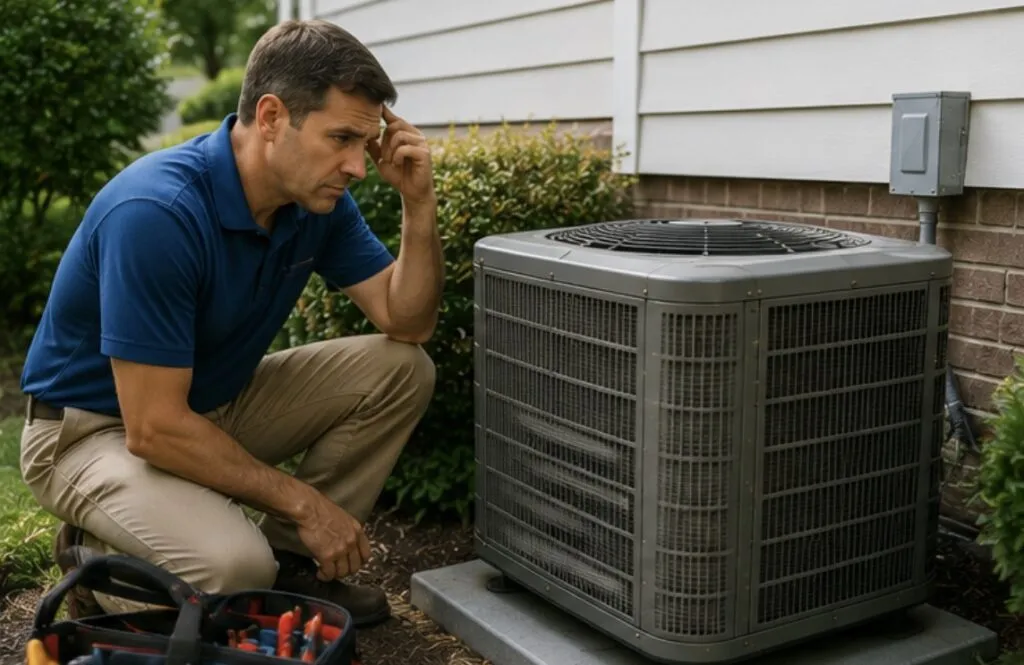
When a 15-year-old air conditioner quits in the middle of a DC heatwave, you face a stressful decision fast. Do you pour money into repairing an aging system, or replace it entirely? With indoor temperatures climbing and your home uncomfortable, it is tempting to grab the quickest fix. But the quickest fix is not always the smartest one for your home or budget.
The honest answer usually leans toward replacement, though it depends on your specific situation. A 15-year-old AC is already near the end of its expected life, and a mid-heatwave failure often signals a deeper problem rather than a simple, cheap repair. Understanding the trade-offs helps you avoid sinking money into a system that will likely fail again next summer.
This guide answers the question directly for DC-area homeowners. It explains why a 15-year-old system is at the end of its life, how to weigh repair against replacement, why heatwaves push old units over the edge, and what to do when yours fails. By the end, you will know the smart move for your home and your budget.
Why a 15-Year-Old AC Is Already Near the End of Its Life
Most central air conditioners last 15 to 20 years, and in the humid DC climate they often land at the lower end of that range. Our long, hot, muggy summers force systems to run hard for months at a time, which accelerates wear on the compressor and other components. At 15 years, your unit has already delivered most of the service life it was built for.
Age also affects reliability in a compounding way. As a system ages, parts wear together, so fixing one failure often exposes the next. A repair that keeps a 15-year-old unit running through this week may simply delay the following breakdown by a month. That pattern is exactly why age is the first thing to weigh in any repair-versus-replace decision.
Age Is Only One Part of the Decision
A 15-year-old AC does not automatically need to be replaced the moment something goes wrong. If the failure is relatively minor and the rest of the system remains in good condition, a repair may still be reasonable.
The bigger concern is what you are likely to spend keeping the system running over the next few years. When an older unit has a major component failure, repeated repairs, declining comfort, or rising operating costs, replacement becomes much easier to justify.
Look at the System’s Recent History
Think about what happened before the heatwave failure. If you have already paid for several repairs, noticed longer cooling cycles, or had technicians repeatedly address different components, the latest breakdown may be part of a larger pattern.
A single repair on an otherwise reliable system is different from the third significant repair in two summers. Looking at the complete history gives you a much better basis for deciding what to do next.
Repair or Replace The System? How to Decide

A useful guideline is the cost-versus-age test. Multiply the repair estimate by the age of the system, and if the result climbs into the thousands, replacement is usually the wiser investment. A common rule of thumb also says that when a repair costs more than a third of a new system on a unit this old, replacing it makes more financial sense.
| Situation | Smarter move |
|---|---|
| Minor repair on a well-maintained unit | Repair, if the system is otherwise healthy |
| Major repair at 15 years | Compare the repair cost closely with replacement |
| Repeated repairs over recent summers | Replacement may offer better long-term value |
| Rising energy bills plus the breakdown | Compare operating costs with a newer system |
| Major compressor or coil failure | Get a replacement estimate before approving the repair |
No single number decides it for every home, which is why an honest evaluation matters. A trusted HVAC contractor should tell you when a repair is genuinely worth it and when replacement serves you better. The goal is not the cheapest bill today, but the lowest total cost and best comfort over the next several DC summers.
Consider More Than the Immediate Repair Bill
The repair estimate is only the starting point. You also need to consider how efficiently the old system operates, whether additional repairs are likely, and how much longer the equipment can reasonably be expected to last.
For example, spending $800 on a repair may seem reasonable when viewed by itself. But if the system is 15 years old, has already required multiple repairs, and is becoming increasingly inefficient, that $800 does not necessarily buy you another several years of dependable cooling.
Why Heatwaves Push Old Systems Over the Edge
There is a reason old air conditioners so often fail during a heatwave rather than on a mild day. Extreme heat forces the system to run continuously at maximum output, which strains a worn compressor and electrical components already near their limit. The very conditions that make you need the AC most are what finally break an aging one.
Heatwaves also expose problems that stay hidden in mild weather. A marginal system might cool adequately in June, then fail completely when demand spikes during a July heat dome. If your 15-year-old unit died precisely when the temperature peaked, that timing is a strong sign it can no longer handle a real DC summer reliably.
Why Continuous Operation Matters
On a moderate day, an older AC may cycle on and off without revealing its weaknesses. During extreme heat, however, the system may run for hours with little downtime. Components that are already worn have fewer opportunities to cool down and recover between cycles.
That does not mean every heatwave failure proves the system needs replacement. A technician still needs to identify the actual failure. But when the failed equipment is already 15 years old, the timing should be considered alongside its overall condition.
The Hidden Costs of Repeatedly Repairing an Old AC
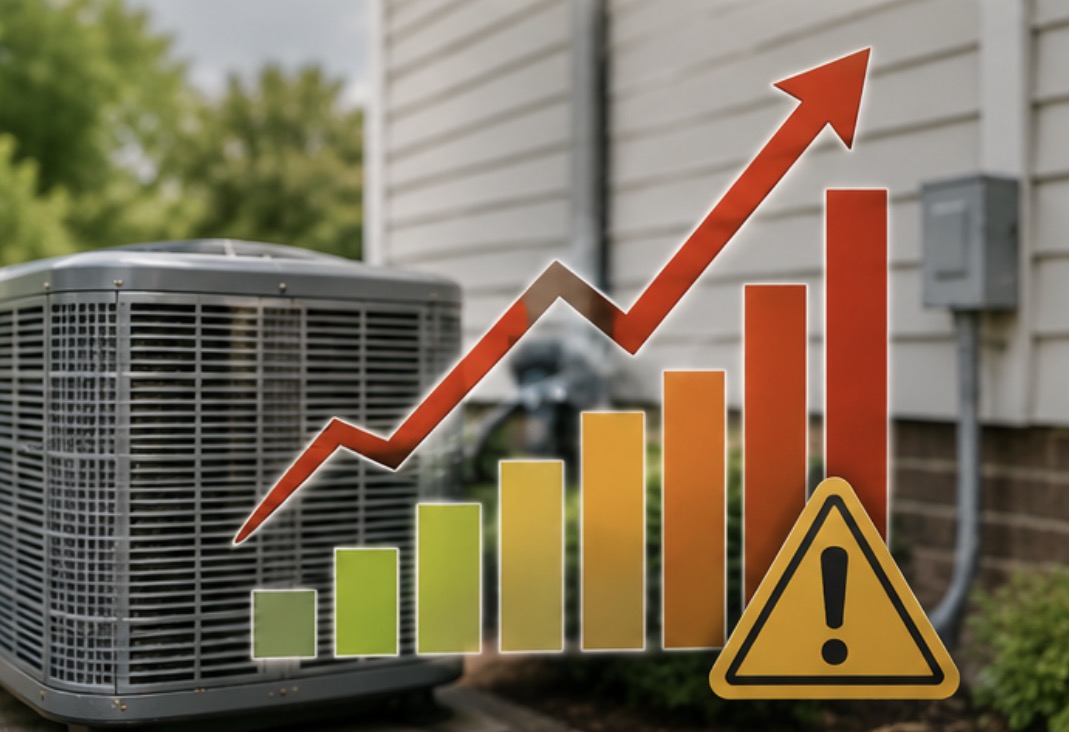
Beyond the repair bill itself, an aging AC costs you in ways that are easy to overlook. A 15-year-old unit was likely rated around 8 to 10 SEER when new, while today’s systems reach up to around 22 SEER2. That efficiency gap means an old system quietly overcharges you on every single electric bill through the long cooling season.
Older units also often use R-22 refrigerant, whose U.S. production ended in 2020. That makes recharging a leaking older system expensive and sometimes impractical. When you add rising repair costs, higher energy bills, and costly refrigerant together, keeping a failing 15-year-old AC alive frequently costs more over time than a new, efficient AC replacement.
Efficiency Can Change the Long-Term Equation
A newer system does more than provide cooling when the thermostat calls for it. Modern equipment can offer improved efficiency and more precise comfort when it is properly sized and installed for the home.
That does not mean every homeowner will immediately recover the replacement cost through lower utility bills. The actual savings depend on the home’s cooling load, equipment efficiency, operating hours, electricity rates, and installation quality. The important point is to compare the total ownership cost rather than looking only at today’s repair invoice.
What to Do When Your AC Fails Mid-Heatwave
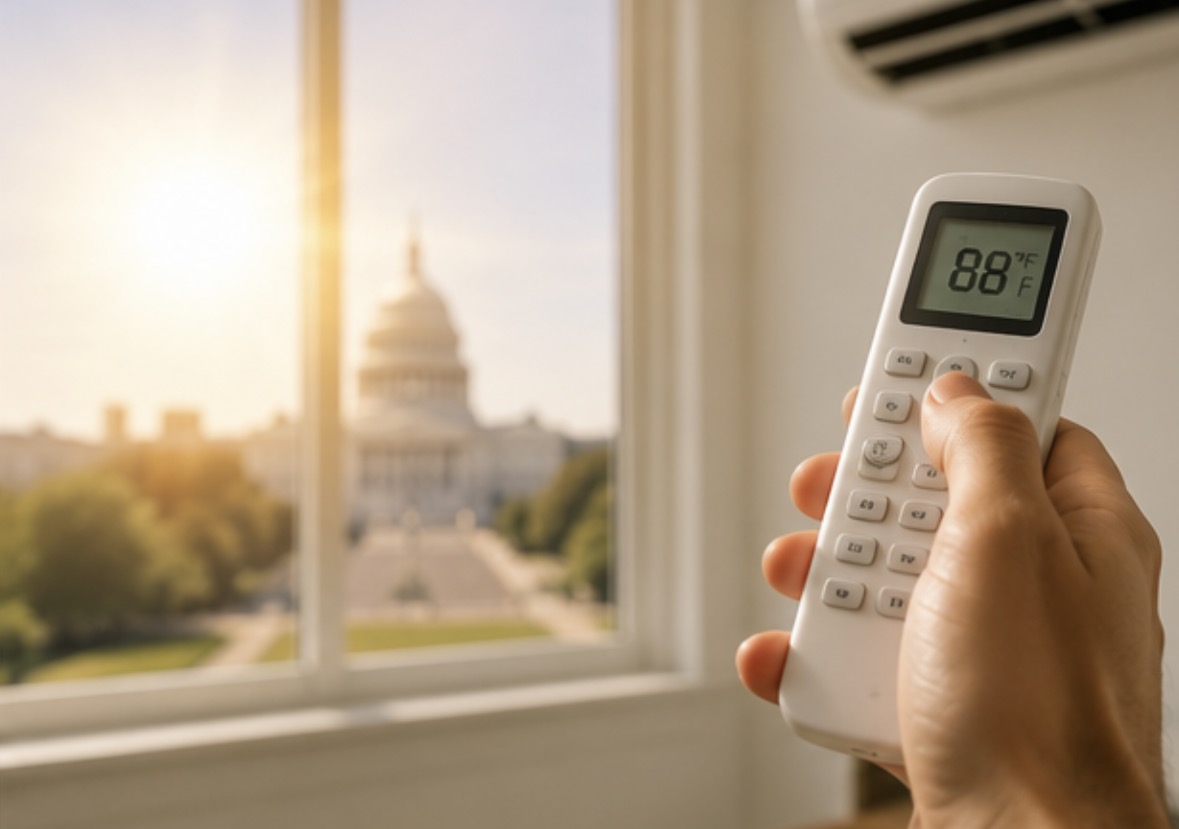
First, stay safe and keep cool while you sort out the fix. Close blinds, run fans, and stay hydrated, and check on elderly neighbors or family, since DC heatwaves can be dangerous indoors. Then call a contractor that offers genuine 24/7 emergency service rather than waiting days for an appointment during the busiest week of the summer.
A good HVAC contractor will diagnose the failure quickly and give you honest options, whether a fast AC repair to get you through or a same-week replacement. Ask for the diagnosis in plain terms, the repair cost, and how that repair compares to a new system. With that information, you can make a calm decision instead of a panicked one.
Ask These Questions Before Approving the Repair
- What actually failed? Get a specific diagnosis rather than a general statement.
- How much will the repair cost? Ask for the expected total, including labor and parts.
- Is the part readily available? A backordered component can extend the time your home remains without cooling.
- What else is showing wear? Ask whether other major components appear close to failure.
- How old is the equipment? Confirm the actual age from the model and serial information.
- What would replacement cost? Comparing both options gives you a better financial picture.
You do not have to make the decision based on pressure from the heatwave. A clear diagnosis and two realistic options can help you determine whether repairing the old system is worthwhile or whether replacement makes more sense.
The Case for Replacing Before the Next Heatwave
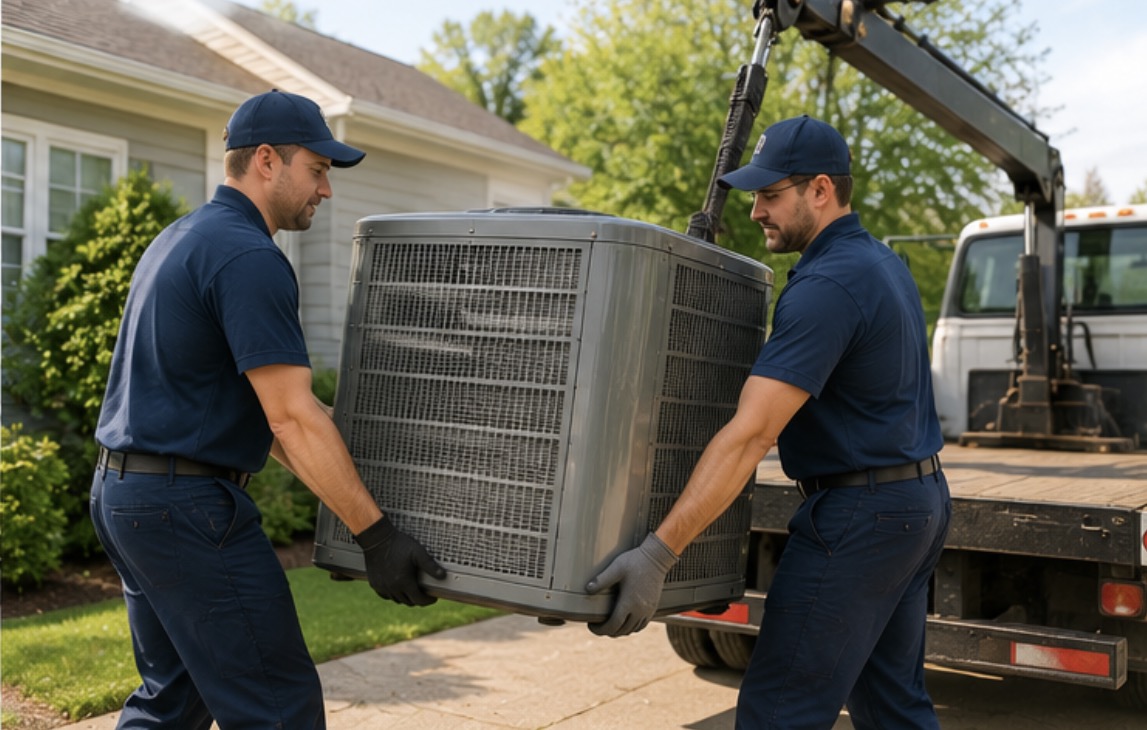
If your 15-year-old AC is already struggling, replacing it before the next major heatwave can give you more control over the decision. Instead of waiting for another breakdown, you can compare equipment, installation costs, warranties, and financing while your current system is still operating. This also gives you time to schedule the project before peak summer demand.
Plan the Replacement Around Your Home
A planned replacement gives the contractor time to evaluate your home’s cooling requirements rather than simply replacing the old equipment with a similar-size unit. Proper sizing, ductwork condition, equipment compatibility, and the home’s layout should all be considered before the new system is selected.
You can also discuss efficiency options and determine which system fits your home’s expected cooling demand. Once the equipment is selected, professional AC installation service can be scheduled at a convenient time rather than during an emergency.
Compare the Full Cost of Staying With the Old System
Replacing an aging AC is a significant investment, but so is repeatedly repairing equipment that is already near the end of its expected service life. Compare the replacement price with recent repair costs, expected future repairs, operating expenses, and the reliability you need from your cooling system.
Replacing before the next heatwave also gives you time to review the installation proposal and warranty rather than making a rushed decision when your home is uncomfortable. For a 15-year-old system that is already showing signs of decline, planning ahead can turn an unavoidable future replacement into a much more manageable project.
Why Choose Su’Coy HVAC in the DMV
When your AC fails in a DC heatwave, you need a contractor who answers fast and advises honestly. Su’Coy HVAC has served the DMV since 1996, offering 24/7 emergency service across Washington DC, Prince George’s County, and the surrounding area. We help homeowners decide between repair and replacement based on facts, not pressure.
Our team diagnoses the real problem, explains your options clearly, and sizes any new system correctly for your home. When replacement is the right call, we install energy-efficient equipment, remove your old unit at no charge, and back the work with a strong warranty. When a repair truly makes sense instead, we tell you that too.
Whether you need urgent AC repair, a planned system replacement, or maintenance to protect a newer unit, Su’Coy HVAC brings honest guidance and 0% interest-free financing to every DMV home. If your 15-year-old AC just failed, reach out to Su’Coy and get a clear, confident answer today.