Skip to content


A new air conditioner is a major investment, so the promise of a 10-year warranty offers real peace of mind. But that phrase carries more nuance than most DC homeowners realize. A 10-year warranty does not automatically mean everything is protected for a decade, and understanding the fine print protects both your comfort and your wallet.
The confusion usually comes from the fact that a new AC actually carries two separate warranties. One covers the manufacturer’s parts, and another covers the labor to install and repair them. They cover different things, last different lengths, and come with different requirements. Knowing how each one works helps you avoid a surprise bill down the road.
This guide answers the question clearly for DC-area homeowners. It explains what a 10-year warranty actually covers, what it excludes, why registration is so important, and how to keep your coverage valid. By the end, you will understand exactly what protection your new AC system carries and how to make the most of it.
A New AC System Carries Two Different Warranties
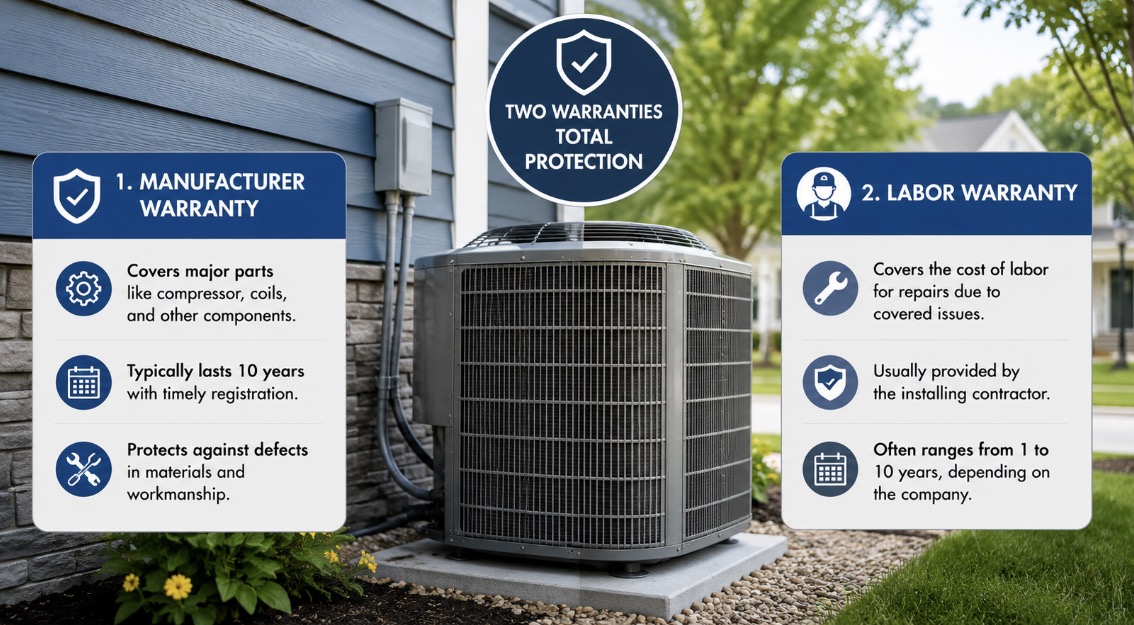
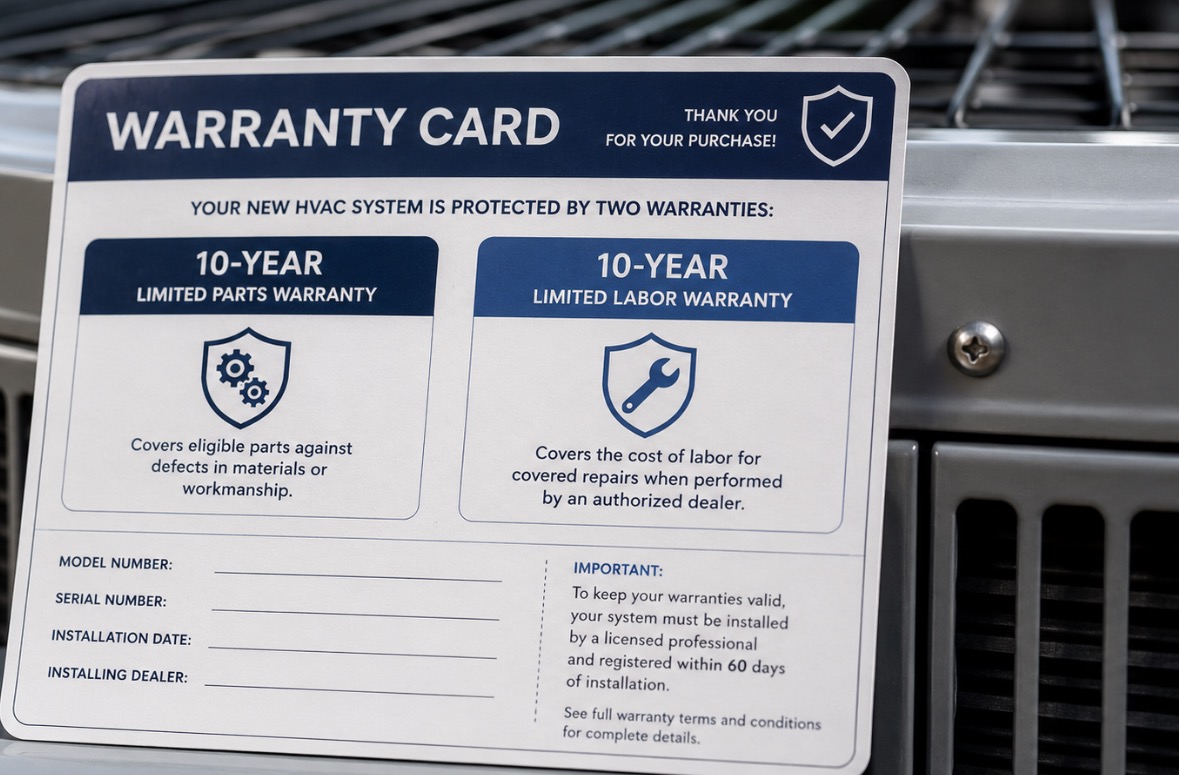
The first thing to understand is that a new AC comes with two layers of protection. The manufacturer provides a warranty on the equipment itself, covering defective parts. Separately, the contractor who installs the system provides a labor warranty, covering the cost of the work to diagnose and fix a problem. The 10-year figure usually refers to the parts.
This distinction matters because a covered part does not always mean a free repair. If a warrantied component fails but your labor warranty has expired, you still pay a technician to install the free part. That gap catches many homeowners off guard, which is why the strongest protection combines a long parts warranty with a long labor warranty together.
| Warranty Type | What It Generally Covers | Who Provides It? | What Homeowners Should Check |
|---|---|---|---|
| Manufacturer warranty | Defective equipment parts | Equipment manufacturer | Covered components and warranty length |
| Labor warranty | Labor involved in covered repairs | Installing contractor | Length of coverage and exclusions |
| Combined coverage | Parts plus qualifying repair labor | Manufacturer and contractor | Whether both remain active for the same period |
The important takeaway is simple: never assume a “10-year warranty” means 10 years of completely covered repairs. Ask the HVAC contractor to explain exactly what the manufacturer covers and what the contractor covers.
What a 10-Year Manufacturer Warranty Actually Covers
A standard 10-year manufacturer’s warranty covers the major components of your system against defects. That typically includes the compressor, which is the most expensive part, along with the coils and other functional parts. If one of these fails due to a manufacturing defect during the covered period, the manufacturer provides a replacement part at no cost to you.
Common Components Covered
| Typically Covered | What It Means |
|---|---|
| Compressor | The costliest component, usually covered for the full 10 years. |
| Condenser coil | Protection against qualifying manufacturing defects. |
| Evaporator coil | Covered against qualifying defects during the warranty term. |
| Functional parts | Components such as certain motors, valves, and controls may be covered. |
The exact components and coverage periods depend on the equipment manufacturer and specific model, so homeowners should always review the actual warranty documentation rather than relying solely on a sales proposal.
In short, the manufacturer’s warranty protects you from paying for defective equipment. It is genuinely valuable, because a compressor or coil replacement out of pocket can be very expensive. But remember that it covers the part itself, not necessarily the labor, refrigerant, or other costs involved in the actual repair.
What a 10-Year Warranty Does Not Cover
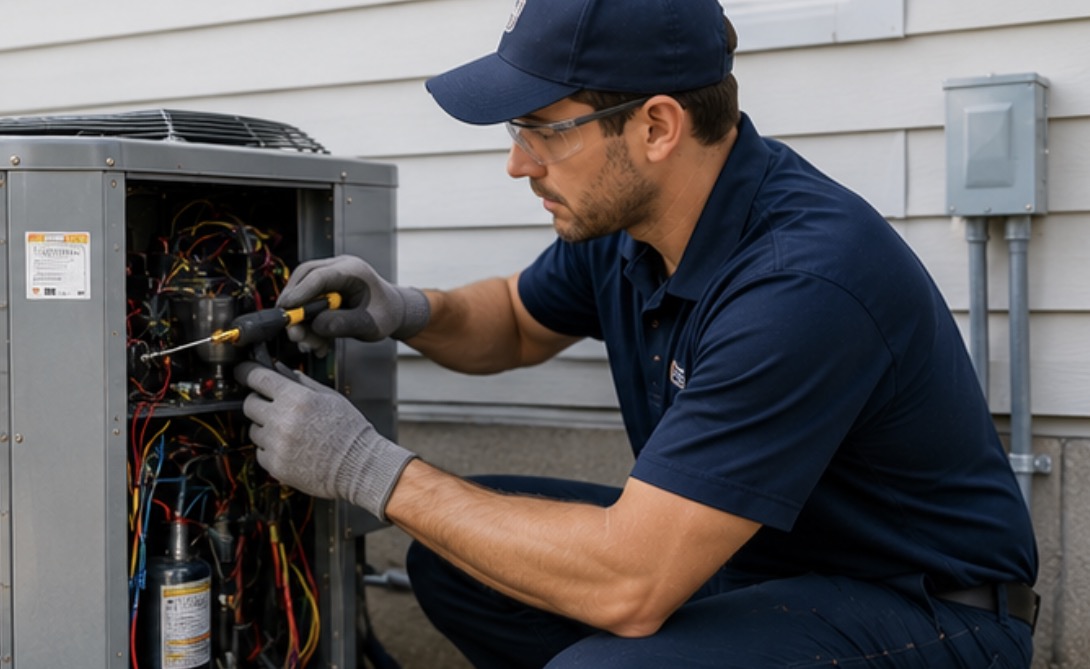
Understanding the exclusions is just as important as the coverage. A manufacturer’s parts warranty generally does not cover the labor to perform the repair, the refrigerant, or routine maintenance. It also excludes damage from improper installation, neglect, power surges, or using the system in ways the manufacturer did not intend. These gaps are where unexpected costs appear.
Common Costs That May Fall Outside Parts Coverage
- Labor: The cost of diagnosing and installing a replacement component may be separate.
- Refrigerant: Additional refrigerant required during a repair may not be included.
- Maintenance: Routine inspections, cleaning, and tune-ups are generally not warranty repairs.
- Improper installation: Problems resulting from incorrect installation may be excluded.
- Neglect: Damage associated with inadequate maintenance may not qualify.
- External damage: Certain electrical events or other outside causes may be excluded.
Improper installation is an especially common pitfall, because a poorly installed system can void the warranty entirely. That is why professional AC installation by a qualified contractor matters so much. The best equipment warranty in the world offers little protection if the system was never installed to the manufacturer’s specifications in the first place.
Why Warranty Registration Matters
Here is a detail that catches many homeowners off guard. Most manufacturers require you to register the new system, usually within 60 to 90 days of installation, to receive the full 10-year coverage. If you skip registration, the warranty often drops to a shorter base term, commonly five years. That single missed step can quietly cut your protection in half.
What to Do After Installation
A homeowner should not simply assume the registration was completed. Confirm the process and keep documentation showing that the equipment was registered.
- Confirm registration: Ask who is responsible for registering the equipment.
- Check the deadline: Find out how long you have to complete registration.
- Keep confirmation: Save the registration confirmation with your HVAC records.
- Save equipment details: Keep the model and serial numbers.
- Keep the invoice: Your installation paperwork can be important when making a claim.
A reputable installer typically handles registration for you or reminds you to complete it, but you should always confirm it was done. Ask your contractor who registers the warranty and request written confirmation.
The Role of the Labor Warranty
Because the manufacturer covers parts but not labor, the labor warranty your contractor provides is where a lot of real value lives. Labor warranties vary widely, from one year to as long as ten, and they determine whether a covered repair costs you anything at all. A longer labor warranty means far fewer surprise bills over the life of the system.
Why Labor Coverage Can Matter Years Later
Imagine a compressor covered by the manufacturer’s warranty fails in year seven. The manufacturer may provide the replacement compressor under its parts warranty. Someone still needs to diagnose the problem, remove the failed component, install the replacement, evacuate and recharge the system as required, and return the equipment to operation.
If the labor warranty has expired, those service costs may become the homeowner’s responsibility.
This is where choosing the right installer truly pays off. Su’Coy HVAC backs new installations with a 10-year labor and parts warranty, so both the equipment and the work to service it are protected. That combined coverage removes the common gap where a free part still comes with an expensive labor charge for a DC homeowner.
How to Protect and Keep Your Warranty Valid
Warranties come with responsibilities, and the biggest one is maintenance. Most manufacturers require documented annual professional maintenance to keep the warranty valid, because neglect causes many failures. Skipping tune-ups can give a manufacturer grounds to deny a claim, so regular maintenance is not just good practice, it actively protects your coverage.
Keep These Records Together
Beyond maintenance, keep every record in one place, including your installation paperwork, registration confirmation, and service history. Use only qualified technicians for any repairs, since unauthorized work can affect coverage.
A simple warranty file can include:
- Installation invoice
- Equipment model and serial numbers
- Warranty registration confirmation
- Manufacturer warranty documentation
- Labor warranty documentation
- Annual maintenance records
- Repair invoices and service reports
Beyond maintenance, keep every record in one place, including your installation paperwork, registration confirmation, and service history. Use only qualified technicians for any HVAC repairs, since unauthorized work can void coverage. These simple habits ensure that if a part ever fails, claiming your warranty is straightforward rather than a frustrating dispute.
Why Choose Su’Coy HVAC for Your New AC in DC
A warranty is only as strong as the installation and the company behind it. Su’Coy HVAC has served the DMV since 1996, and we install new AC systems to manufacturer specifications so your equipment warranty stays fully intact. We also help you register the system and keep the records you need to claim your coverage later.
Just as important, we back our installations with a 10-year labor and parts warranty, closing the common gap where homeowners pay labor on a covered part. That combined protection, along with free removal of your old system and 0% interest-free financing, gives DC homeowners genuine confidence in their investment for the next decade.
Whether you are planning a new AC installation, need maintenance to keep your warranty valid, or simply have questions about your coverage, Su’Coy HVAC brings honest answers to every DMV home. If you want a new system installed right and protected for years, reach out to Su’Coy HVAC today.