Skip to content


Your Ultimate Furnace Maintenance Guide for Washington, DC Winters
Winter in Washington, DC, doesn’t mess around. One day you’re enjoying fall foliage, and the next, you’re cranking up the heat, wondering if your furnace is up to the challenge. Here’s the thing: your furnace won’t magically prepare itself for winter. Neglect it, and you’re gambling with breakdowns, sky-high energy bills, and potentially unsafe operating conditions.
Proactive furnace maintenance isn’t just a chore to check off your list—it’s your insurance policy against freezing nights, emergency repair calls, and wasted money. Whether you’re a hands-on homeowner who loves DIY projects or someone who’d rather leave it to the pros, this guide breaks down exactly what your heating system needs before temperatures plummet. Let’s make sure your home stays warm, safe, and efficient all winter long.
Your Pre-Winter Furnace Checklist: Don't Skip These Steps

Think of this checklist as your furnace’s pre-season physical. These core maintenance tasks ensure safe operation, efficient heating, and early problem detection before they turn into expensive emergencies.
Priority maintenance tasks:
- Replace or inspect your air filter for unrestricted airflow
- Test and program your thermostat with fresh batteries
- Check carbon monoxide detectors and verify they’re functioning
- Visually inspect the burner area for soot, corrosion, or unusual odors
- Ensure all air registers and returns are open and unobstructed
Here’s a quick breakdown of what you can tackle yourself versus what needs professional attention:
| Task | How Often | DIY-Friendly? | Time Required | Why It Matters |
|---|---|---|---|---|
| Air filter check/replacement | Every 1-3 months | Yes | 10-15 minutes | Restores airflow, lowers energy use |
| Thermostat check & batteries | Annually | Yes | 10 minutes | Improves comfort, reduces runtime |
| CO detector test | Monthly | Yes | 5 minutes | Critical safety protection |
| Visual vent/flue inspection | Pre-winter | Depends | 15-30 minutes | Prevents dangerous blockages |
| Professional tune-up | Annually | No | 60-90 minutes | Complete safety check and optimization |
The beauty of this checklist? Completing these tasks now means you’re catching small issues before they become big, expensive problems. Speaking of which, if you discover anything concerning during your inspection, don’t hesitate to schedule professional furnace maintenance or repair right away.
Filter Inspection: The 15-Minute Task That Saves You Hundreds

Your furnace filter might be the most overlooked component in your entire heating system—and that’s a costly mistake. A clogged filter forces your furnace to work overtime, straining the heat exchanger, spiking your energy bills, and potentially leading to system failure.
Here’s how to check it properly:
- Turn off the power to your furnace at the breaker
- Locate and remove the filter (usually near the return air duct)
- Hold it up to the light—if you can barely see through it, it’s done
- Replace disposable filters or clean reusable ones according to manufacturer instructions
- Note the date and set a reminder to check again in 1-3 months
Pro tip: Use MERV-8 to MERV-11 filters for most DC homes. Higher MERV ratings offer better filtration but can restrict airflow if your system isn’t designed for them. When in doubt, check your furnace manual or ask during your next professional inspection.
Thermostat Troubles: The Brain of Your Heating System

Your thermostat controls everything, so if it’s miscalibrated or running on dying batteries, your entire system suffers. You’ll get uneven temperatures, short cycling that wears out components, and unnecessarily high energy bills.
Quick thermostat maintenance:
- Replace batteries annually (even if they seem fine)
- Test by setting it a few degrees above current temperature and listening for the furnace to kick on
- Compare the displayed temperature to a reliable thermometer in the same room
- For smart thermostats, verify remote connectivity and update firmware if needed
- Clean dust from the thermostat housing with a soft brush
If your thermostat consistently shows incorrect temperatures or your furnace doesn’t respond properly, it might be time for an upgrade. Modern programmable and smart thermostats can significantly reduce heating costs while improving comfort.
DIY Maintenance: What You Can (and Can't) Safely Do

Let’s be clear: some furnace maintenance tasks are perfect for homeowners, while others require professional expertise and specialized tools. Knowing the difference keeps you safe and your furnace running properly.
Safe DIY tasks:
- Replacing air filters
- Testing your thermostat
- Checking carbon monoxide detectors
- Vacuuming around the blower area (with power off)
- Ensuring vents and registers are open
- Sealing obvious air leaks around ducts
Always call a professional for:
- Anything involving gas lines
- Heat exchanger inspection
- Combustion analysis
- Electrical component testing
- Internal cleaning of burners or ignition systems
- Refrigerant handling (for heat pumps)
Critical safety rules for DIY work:
- Always shut off the power at the breaker before touching anything
- Turn off the gas supply if you smell gas or need to work near gas components
- Wear basic PPE, including safety glasses and work gloves
- Stop immediately if you see soot, smell strong odors, or notice anything unusual
- Never bypass safety switches or force components
Have the right tools ready: basic screwdrivers, a shop vacuum, a flashlight, replacement filters, and fresh batteries. If you encounter anything beyond basic cleaning and inspection, that’s your cue to call in the experts.
The Professional Tune-Up: Worth Every Penny

You might be wondering: “If I can do some maintenance myself, why pay for professional service?” Here’s why an annual professional tune-up isn’t optional: it’s essential.
What professionals check that you can’t:
- Heat exchanger integrity: Cracks allow deadly carbon monoxide into your home
- Combustion efficiency: A proper fuel-to-air ratio saves money and prevents safety issues
- Gas pressure and valve operation: Incorrect pressure reduces efficiency and creates hazards
- Electrical connections and components: Loose connections cause failures and fire risks
- Ventilation and flue conditions: Blockages lead to carbon monoxide buildup
- Safety controls and limit switches: These protect your system and your home
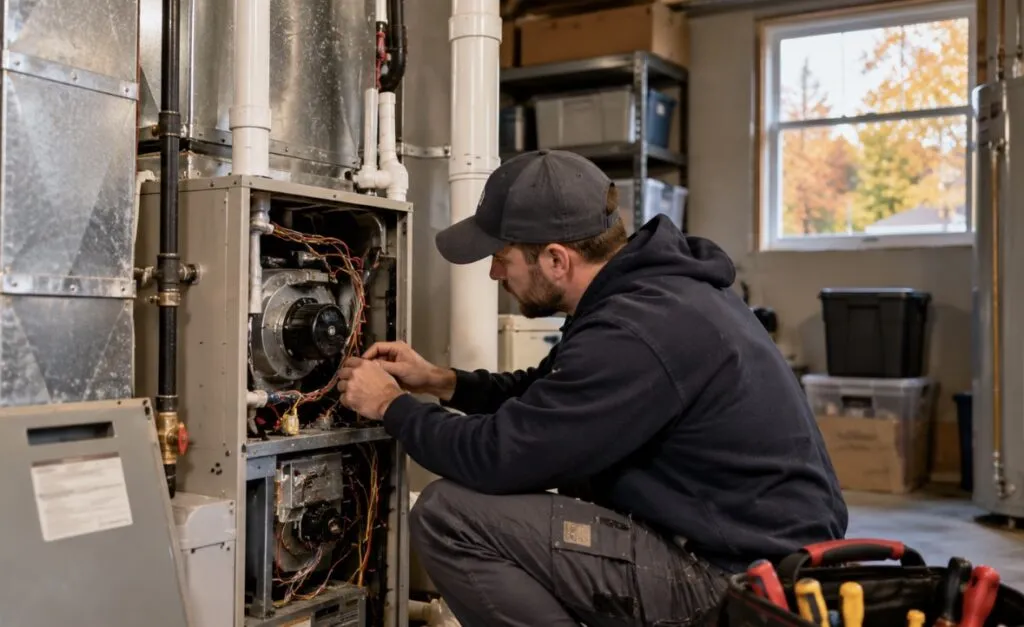
During a comprehensive tune-up, technicians use specialized diagnostic equipment to measure system performance, identify wear patterns, and catch problems months before they cause breakdowns. They’ll clean burners, test ignition systems, verify safety controls, and document everything for warranty compliance.
The bottom line: Professional maintenance typically pays for itself through improved efficiency, extended equipment life, and avoided emergency repairs. Schedule your tune-up in early fall before HVAC companies get slammed with winter emergency calls.
Ready to schedule your seasonal tune-up? Contact Su’Coy Heating, AC & Duct Cleaning, and let our certified technicians handle the technical stuff while you enjoy peace of mind.
Blower and Vent Inspection: Keeping Air Moving Efficiently

Your furnace blower is the muscle that pushes heated air throughout your home. When it’s dirty or struggling, you’ll notice weak airflow, uneven heating, and higher energy bills.
Basic blower inspection (power off!):
- Remove the blower access panel
- Look for visible dust buildup on the blower wheel
- Gently vacuum accessible surfaces with a soft brush attachment
- Listen for unusual noises when you turn the system back on
- Feel vents throughout your home for consistent airflow
Also, check your vents and registers:
- Remove vent covers and vacuum inside supply registers
- Clean return air grilles and the surrounding wall area
- Ensure furniture, curtains, or rugs aren’t blocking airflow
- Open all registers, closing them doesn’t save energy, it creates pressure imbalances
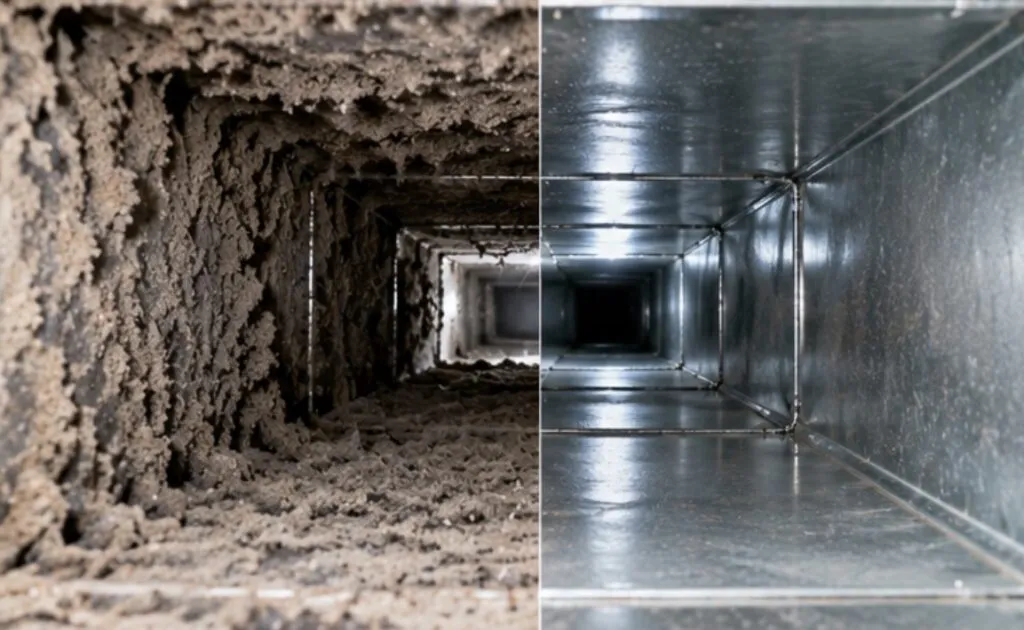
If you notice weak airflow even after cleaning, persistent unusual noises, or the blower seems to struggle to start, you need a professional diagnosis. Deep cleaning of blower assemblies and ductwork requires specialized equipment and expertise.
Red Flags That Demand Immediate Professional Attention
Some furnace issues aren’t “wait and see” situations—they’re “call now” emergencies. Knowing these red flags can literally save lives.
Call immediately if you notice:
- Carbon monoxide alarm activation: Evacuate and call 911
- Strong gas smell: Don’t touch switches, get out, call the gas company
- Visible soot or heavy rust: Indicates combustion problems
- Persistent burning smell: Electrical issues or overheating
- Yellow or orange flames: Should be blue; yellow means incomplete combustion and CO risk
- Frequent cycling on and off: System is struggling or improperly sized
- Complete loss of heat: Especially dangerous during extreme cold
Don’t gamble with safety issues. If your furnace shows any of these symptoms, shut it down and call for emergency furnace repair right away. Your family’s safety is always worth the service call.
Whole-Home Efficiency: Beyond the Furnace
Your furnace is only part of the heating equation. Even a perfectly maintained furnace wastes energy if your home is leaking heat like a sieve. Smart efficiency improvements complement your furnace maintenance and multiply your savings.
High-impact efficiency upgrades:
| Area | Action | Efficiency Impact | DIY Difficulty |
|---|---|---|---|
| Duct seams | Seal with mastic or metal tape | High—reduces heat loss | Moderate |
| Attic insulation | Add or upgrade insulation | High—keeps heat inside | Moderate to Complex |
| Weatherstripping | Seal doors and windows | Medium—stops drafts | Easy |
| Combustion air area | Seal gaps (maintain clearances) | Medium—prevents heat loss | Easy with caution |
Start with the easiest wins:
- Apply weatherstripping to exterior doors
- Add door sweeps where you see light underneath
- Seal obvious gaps around windows with caulk
- Insulate accessible ductwork in unconditioned spaces
For duct sealing, use mastic or UL-approved metal foil tape (not standard duct tape, which fails quickly). Focus on joints and connections you can easily reach. For major duct repairs or insulation projects near your furnace, call professionals who understand combustion air requirements and building codes.
The Real Cost of Skipping Maintenance
Let’s talk money. Every homeowner wants to save a buck, but skipping furnace maintenance is penny-wise and pound-foolish. Here’s what neglect actually costs:
- Higher energy bills: A dirty filter alone can increase energy use by 5-15%. Add in other efficiency losses from neglected maintenance, and you could be wasting hundreds of dollars per heating season.
- Shorter equipment life: Furnaces should last 15-20 years with proper care. Neglect that maintenance, and you might be shopping for a replacement at 10-12 years—a premature expense of several thousand dollars.
- Emergency repairs: A routine maintenance visit might cost you a service fee. An emergency breakdown on the coldest night of the year? That’s premium pricing plus the cost of whatever failed, often several times more expensive.
- Safety risks: This isn’t about money, but it’s worth mentioning. Neglected furnaces can develop carbon monoxide leaks, gas leaks, or fire hazards. The cost of a tragedy? Immeasurable.
Regular maintenance isn’t an expense, it’s an investment that pays dividends in lower bills, extended equipment life, and peace of mind.
Stay Warm All Winter with Su'Coy Heating, AC & Duct Cleaning

Winter preparation isn’t something you do once and forget. Your furnace needs consistent attention, monthly filter checks, annual professional tune-ups, and immediate response to warning signs. The good news? With the right maintenance routine, your heating system will reward you with reliable comfort, lower energy bills, and years of dependable service. Don’t wait for the first freeze to discover your furnace isn’t ready. Whether you’re handling basic DIY tasks or need comprehensive professional service in Washington, DC, Su’Coy Heating, AC & Duct Cleaning has you covered. Schedule your pre-winter furnace maintenance today and enjoy a warm, worry-free winter season.